Carroll / Fletcher

Jeremy Bailey Next

Sympathetic Painting Software

A New Online Artwork

12 May – 27 May 2016


logo


“As I stared into their open coffins I thought to myself what a shame we didn’t 3D scan their bodies.”
– Famous New Media Artist Jeremy Bailey.

For the third in Carroll / Fletcher’s ongoing series of online exhibitions, Jeremy Bailey (in collaboration with Reinier Feijen, www.boxofchocolates.nl) has uploaded himself to the Internet in search of immortality. As data it is possible for Bailey to spawn multiple instances of himself, each capable of expressing themselves autonomously. A unique avatar – a Bailey – is created for each visitor to JeremyBaileyNext.com. Each Bailey is capable of analysing and learning from its interactions with a visitor to create unique gestural artworks that respond sympathetically to conversational prompts in real-time – healing conversations with a famous new media artist, as paintings.

Click here to begin your conversation with Jeremy (currently, a desk-top browser-only experience).

Collectors can purchase a customised special edition Bailey that responds to them in the colour of their choice (to match their decor or mood).  Alongside their very own Bailey, collectors also receive a high resolution artwork, based on their interaction with their Bailey, delivered on a commemorative date of their choosing once a year for eternity.


Next Big Thing – a solo show at Pari Nadimi Gallery, Toronto

C-Prints, software installation and performance ephemera on view until 28 May.

Jeremy Bailey Next runs parallel to Next Big Thing, a solo exhibition at Pari Nadimi Gallery in Toronto, Canada. Featuring prototype software of Jeremy Bailey Next programmed to read Bailey’s email inbox and respond with sympathetic gestural paintings. Several of these gestures have been rendered as high resolution C-Prints and 3D printed porcelain.

More information about the exhibition available here.

Next Big Thing, installation view, Pari Nadimi Gallery

Image: Jeremy Bailey, Next Big Thing, installation view, Pari Nadimi Gallery, 2016 (courtesy Pari Nadami Gallery).
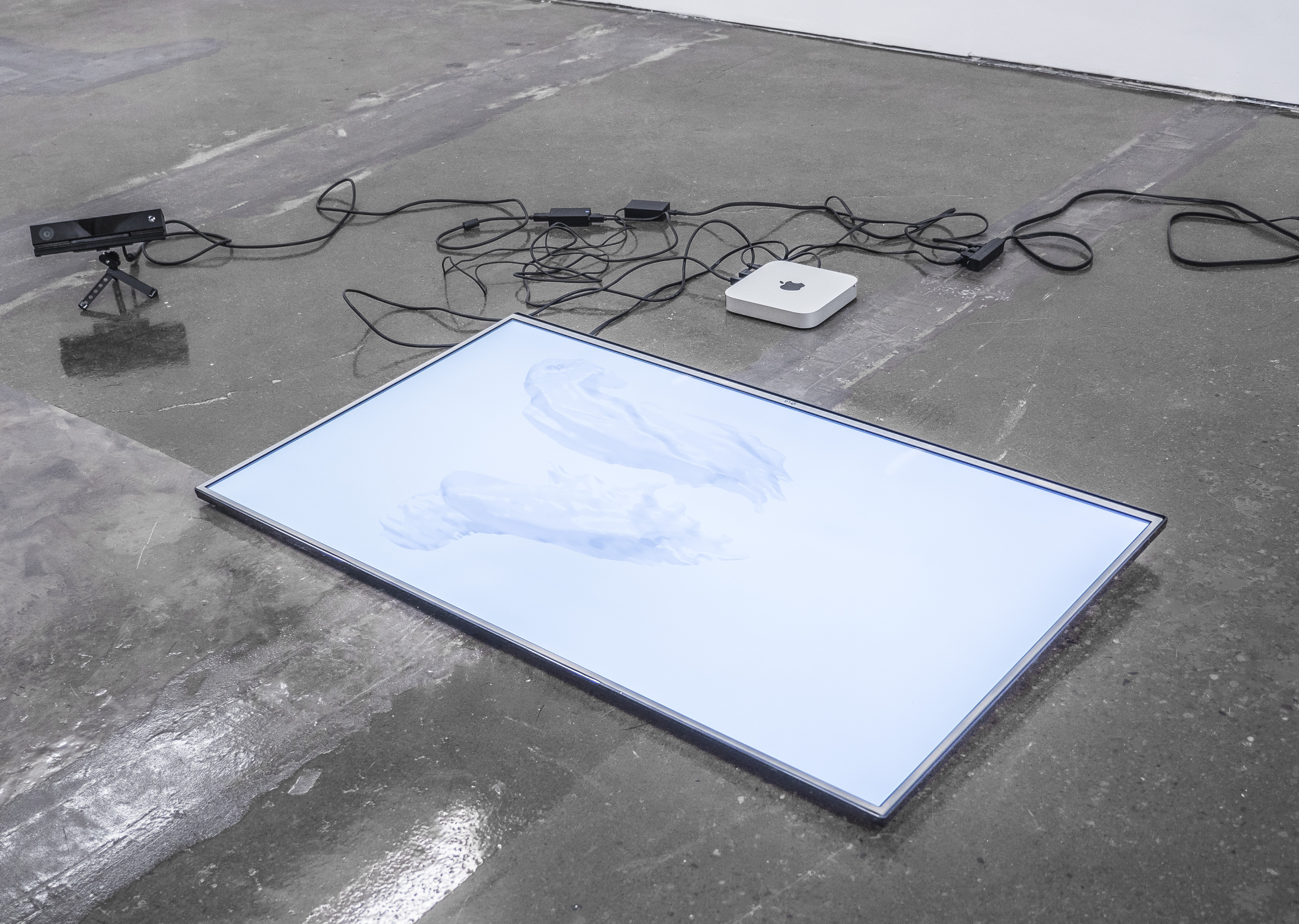
Jeremy Bailey Next, (Custom Software, Computer, Kinect Camera, LCD Panel, Cables), h 100%22 x w 100%22

Image: Jeremy Bailey, Jeremy Bailey Next, 2016 (courtesy Pari Nadami Gallery).
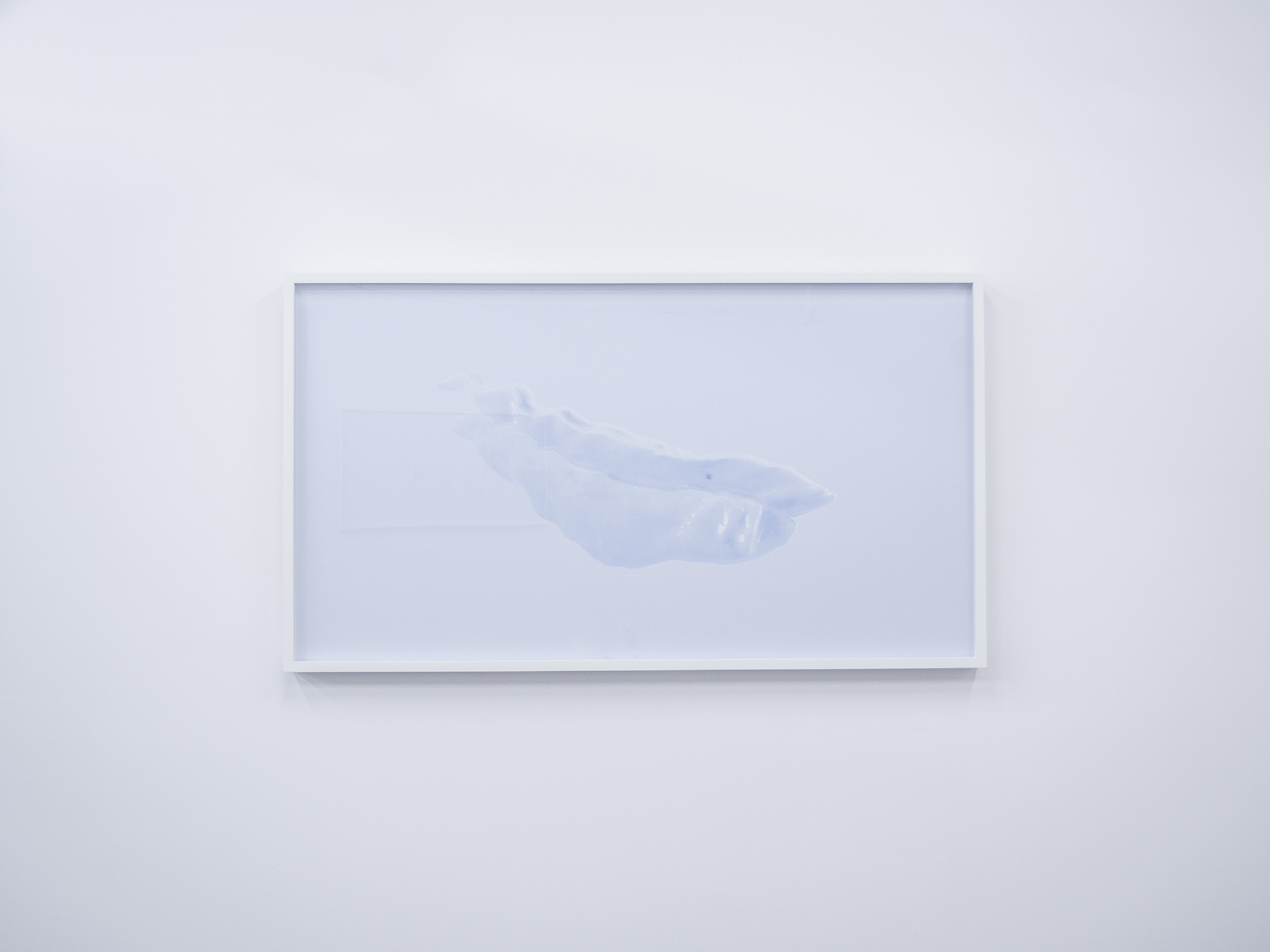
Gesture II, C-Print, 2016, h 29 x w 50”

Image: Jeremy Bailey, Gesture II, 2016, (courtesy Pari Nadami Gallery).

Gesture I, Porcelain, 2016, w 6.4%22 h 4.9%22 d 1.7%22 + Performance Ephemera

Image: Jeremy Bailey, Gesture I, 2016 and Jeremy Bailey, Performance Ephemera, 2016, (courtesy Pari Nadami Gallery).


Patent Drawings at Whitechapel Gallery, London

12 drawings (from a series of 14, each an edition of 5), India ink on paper, on view at the Electronic Superhighway exhibition at the Whitechapel Gallery, London until 15 May, thereafter by appointment at Carroll / Fletcher, London.

whitechapelInstall

Image: Jeremy Bailey, Patent Drawings, Installation View, Whitechapel Gallery, 2016

Image: Jeremy Bailey
, Apparatus for the Display and Control of Television Preferences as Facial Fashion on the Internet
, 2013
Price on application

Image: Jeremy Bailey
, Apparatus for the Display of Wearable augmented reality Public Sculpture on the Internet, 2011
Price on application

For his Patent Drawings series Bailey created India ink drawings in the style of technology company patents. The series highlights the increasingly absurd patents being granted for ever-more abstract software that now often incorporate our bodies and our gestures. Many of the drawings are of software performances and videos Bailey has brought to life over the last decade, some are unrealised concepts in reference to future projects.

The drawings are available for sale either individually or as the whole series.  A pdf containing high quality images of the series is available here. Prices on application to steve@carrollfletcher.com.

Jeremy on patents, copyright and the future of technology

“Really when you think about it, artists like me are a lot like inventors; we bring new ideas to life that change the world. But world-changing inventors, both good and evil, are currently at war. Big mean tech companies like Google, Apple and Samsung are being granted hundreds of patents that encroach upon the free spirit of the altruistic artist.  At risk: the future of self expression. Now more than ever, the world needs us all to be inventors… [read more here]” Courtesy ArtFCity and Jeremy Bailey.

Biography

“Since the early noughties Bailey has ploughed a compelling, and often hilarious, road through the various developments of digital communications technologies. Ostensibly a satire on, and parody of, the practices and language of ‘new media’, the jocose surface of Bailey’s work hides an incisive exploration of the critical intersection between video, computing, performance and the body.” Morgan Quaintance, Rhizome. Read the full article here.

Bailey’s recent exhibitions and performances include Electronic Superhighway (2016-1966), at Whitechapel GalleryLondon; You Are Here: Art After the Internet at ICALondon; Life Feed: New Works by Jeremy Bailey and Antoine Catala, New Museum, New York; The Future is Now: Media Arts, Performance and Identity after Nam June Paik, Tate Liverpool; and Faceless, Quartier21, Vienna and Mediamatic, Amsterdam. Recent commissions include works for the Southbank Centre, London; FACT, Liverpool and The New Museum, New York.

http://jeremybailey.net/

“I am in London, talking to ‘new media artist’ Jeremy Bailey in Canada via Skype. We are both watching a puddle. In Newcastle. Two people, three cameras, at least five screens and one giant puddle. “I love this!” cries Bailey. “The whole industrial, military machine for this! To watch a puddle in Newcastle.”…  ” From an interview with Nell Frizzell in the Guardian (available here).


let this be us


Richard T Walker

let this be us

2012, 7’44”, single channel video installation

3 May –  11 May 2016

Richard T. Walker, let this be us, 2012, 13. guitar valley valley

“During the making of let this be us I was thinking a lot about the Kelsey essay Landscape as Not Belonging in the book Landscape Theory [ed. Rachel DeLue and James Elkins, 2007]. Kelsey proposes the idea that over time we have fantasised ourselves into a situation whereby we feel alien to the landscape so that we can then desire to ‘belong’ to the landscape. Of course, we are nature, we are not separate from it; we have just conditioned ourselves to think and act this way. I like thinking about a situation where someone, somewhere, against all odds actually becomes ‘one’ with nature. However, because this would mean breaking down so many of the perceptual boundaries that we have culturally constructed, their existence and sense of self becomes very different.”  Richard T. Walker.

Shot in the Anza Borrego desert in Southern California, let this be us is an elegantly composed narrative in which the artist is seen traversing the desert while carrying what appears to be a photograph of the same landscape mounted on a poster board. After apparently aimless wandering, the board is erected on its camera tripod legs and the scene in the poster board photograph and the actual landscape fall into line. Then Walker begins a wordless song that, as the video progresses, gains layers of instruments and voices, both generated within the work and as an added sound track.

The final scene begins with the artist partially obscured behind the poster board sign so that just legs and the back of the head are visible. As the music draws to a close, he walks away towards the horizon, swiftly vanishing entirely behind the sign and into the work/world.

7

Biography

Walker’s films show the artist alone, his back to the viewer, in the centre of a dramatic landscape contemplating the infinite, awe-inspiring mysteries of an impersonal natural world- a position reminiscent of a classic romantic figure. As the film’s narrative unfolds, accompanied by Walker’s musical compositions, viewers find themselves becoming beguiled by the gentle wit and drawn into the artist’s intimate relationships, as he apparently picks over the intricacies of his personal life in the face of an emotionally detached nature.

Describing his work, Walker states, “I think, or I hope, that the viewer becomes simultaneously pushed away and pulled towards the landscape. There is a sort of redemption in the music – the idea of the Sublime is re-appropriated, re-positioned and I think the initial relationship to the Sublime becomes questioned.”

“Although Walker’s work obviously participates in the tradition of ‘land art’, he has staked out a position very much his own. It goes without saying that his practice is at odds with the monumental inscriptive gestures of the first generation of earthmoving American land artists, and even those approaches with which he has common ground – the ambulatory poetics of Hamish Fulton or Richard Long, for instance – still have at their core a subtle yet unmistakeable impulse towards colonisation, even if only linguistic, and a kind of self-seriousness that is in Walker’s work always tempered by a tacit acknowledgement of the absurd mismatch between the individual and the world that is the flip side of any attempt, however serious or lyrical, to draft nature into an artistic programme. Indeed, this disparity lies at the heart of the gently humorous caricature Walker enacts… [more here]” Jeffery Kastner, 2013.

Recent solo shows, group exhibitions and performances include everything failing to become something, Carroll / Fletcher, London; In accordance with things, àngels, Barcelona; the fallibility of intent, Di Rosa, Napa, USA (all 2015); the predicament of always (as it is), The Contemporary Austin, Austin, USA (2014); the predicament of always (as we are), ASU Art Museum, Tempe, USA (2014); the security of impossibility, The Kadist Art Foundation, San Francisco, USA (performance) (2013); in defiance of being here, Carroll / Fletcher, London, UK (2013); let this be us, Des Moines Art Center, Iowa, USA (2013); and Stage Presence, SFMOMA, San Francisco, USA (performance).

www.richardtwalker.net

Richard Walker at Carroll/Fletcher here.

Filmography

an is that isn’t always, 2015
.
.

2011, 9′ 58″, three channel video installation

“… embracing each thing with the type of meaning only words can provide; beautiful and concise, they hide their limitations with perfection. It all begins to seem very predictable as everything manifests all too comfortably inside the guise of recognition. You think how there was no hesitance and how the speed an eagerness of meaning appeared almost desperate. As you try to assemble what is now before you, you mourn a little for what you have lost, for you could never again acquire the not knowing that so beautifully placed you in the centre of it all.” From the speed and eagerness of meaning.

5

“He can’t describe anything he sees because nothing fits into words anymore. He occasionally experiences feelings that are associative to the things in front of him but they exist between and beyond emotions, so translation is impossible. He wants to see things as they were. With the ability to ascribe meaning and names to objects again, finding purpose and justification even if it isn’t true. He wants everything to be just what it was.” From the speed and eagerness of meaning.


outside of all things 

2013, 7′ 51″, two channel video installation

double

In contrast to the configuration of the screens in the speed and eagerness of meaning, in outside of all things the two screens are installed on opposite walls. Although outside of all things and let this be us are stand-alone works that can be exhibited separately, the two works are conceived as companion pieces – the soundtracks of the two works have been designed such that when the works are installed in adjacent rooms the sound bleed between the two rooms harmonises to create a single soundtrack, and the conceptual content and emotional register of the works resonate to create an immersive ambulatory experience in which the audience moves between the two rooms.


proximity of longing, 2013

27 archival pigment prints, 30.7 x 46cm
RTW proximity of longing 3, 2012-md

I have become far too familiar with these places

I have forgotten the beauty of a vista or what is actually meant by a view.

Distance is now just a matter of fact.

A selection of small shapes extracted from a greater series of shapes;

Artefacts that interrupt an otherwise perfect line of sight.

Being here feels like an assertion of every moment.

And I have wanted nothing more than for these few moments to become less and less identifiable;

Acknowledgements of existence that I can project onto, but nothing else.

We have to create a new situation.

One where we can once again convince ourselves that I am alien to all of this.

We need to return to the understanding that I am a completely separate entity.

Then we can long for a time when we can be together again.

For it is within the proximity of longing that I remember the experience of our unity being the most palpable.

We must establish this as a space that exists outside of all the things within it.

Including, most importantly

myself.                       yourself.                      ourself.

Richard T. Walker, proximity of longing,2013, 9

CATALOGUE

Holly Antrum

CATALOGUE

2013, 19’17”

26 April – 2 May 2016

Screen Shot 2016-04-26 at 12.10.44

Synopsis (courtesy the artist)

Catalogue is made with Jennifer Pike, artist, collaborator and 93 year-old wife of the late Bob Cobbing. The film offers observance to chance and language in the exchange between artist subject and artist filmmaker. Through the prism of simple gestures of experimentation in the everyday life of a now elderly artist the film engages with existing ideas of creative interruption and distraction around Pike and Cobbing’s work. Focusing on Pike as a catalyst of language and memory in the present, her history is touched upon by situating her within the material of the 16mm to digital film and her computer drawings Computer Dances (1995) as much as her material environment, papers and objects. Pike reveals her performance presence and interplay with the camera as she gives a reading of Cobbing’s ABC in Sound (1965) in a gallery space filled with her paintings, arranged for the film away from the setting of the home and studio. Filmed in Canonbury, North London and Camden Arts Centre, London.

Screen Shot 2016-04-26 at 12.01.18

Outside Noise

“To begin with I thought it may as well consist of a turning shot panning the room, with just Jennifer’s shoulder escaping the edge as she tried to come around the back of the camera. She was always active in the small space we had, and liked to look over my shoulder as much as perform. Perhaps I should sit in front and oblige…

“The opportunity to film and make Catalogue was appropriate to my life at the time, but it required me to become quite lost in it all, unable to see the bottom. I was looking for a recording that has a natural gesture, in the way that the more times you do something the more it becomes your own.Recording sound with and without the camera also adds to this.

“Just having the equipment there is a different sort of engagement. I was building a routine with Jennifer that was about maintaining an ease that allowed her space to reveal her ongoing creativity at 93, whether that was to do with recurring thoughts about existing work which I would try to catch within long sound recordings of the room, or through watching threads of her gaze and subsequent comments: observations connecting everyday things around her with passing ideas. Over time I was in place to interpret the degree and sense in which her practice was still active. How it could be revealed had to except elderliness and poor memory but allow for ephemera and voices, curiousity and repetition. Through being with Jennifer’s observations and habits I felt a readiness for the camera to run, which in turn enabled the film to engage with one another’s presence, and thus the presence of both the equipment embedded into that relationship as much as the visibility of her history around us.

“However there’s a joke to me as analogue cameras are noisy and archaic, even eccentric, another character to mind. I’m operating the thing myself hoping you’ll excuse that I did not go to film school or invest in professionals, and I’ve skipped the nag that film is dying out in search of a workable hybrid. So the ‘performance’ of filming also gets tangled into the performance of the subject in my work. I have been using the analogue process to slow everything down at the front of the activity, to seize the gaps in coverage and feel its risks or relinquish some control. Working with Jennifer was working without a script so the narrative partly comes from the manual object standing between us and I choose a subject according to these possible crosshairs between subject and medium. Later on I worked digitally, reassessing the footage as a transmitted copy of the original, something that has almost already been ‘archived’ by being scanned, available to a new set of decisions and textures.

“Sound increasingly draws my attention and I found the opportunity to build a layered sense of space via background noise exterior and interior to the image, plentiful in a project of this length and subject matter. Such accidental punctuations – being akin to the spirit of the live performances of Bob and Jennifer – and the sense that the ‘stuff’ they were making their work from is s”till in the air or drifting over into now: perhaps they reappear tangentially like a ghost – or fade as references, to the fresh impulses of new hands… The blend of a recording based on prior observations or permeated by surprise was always to be allowed for. Then, in the captured distance re-emerging during editing, the ephemeral landscape around the human is most fascinating.”

Extract by Holly Antrum, Outside Noise, 2014

Outside Noise first published by Grand Union, Birmingham, 2014 in conjunction with ‘Holly Antrum, A Diffuse Citizen’ with writing by Holly Antrum, Jonathan P. Watts and George Vasey

Second edition printed on the occasion of the exhibition ‘Holly Antrum, Catalogue’ (2 April – 12 May 2016, Edinburgh Sculpture Workshop). Edited by Holly Antrum and Jonathan P. Watts. Published by Edinburgh Sculpture Workshop 2016. To order a copy please contact peter@edinburghsculpture.org.

Catalogue (2012-14) has been screened in the UK and internationally, including a current solo presentation at Edinburgh Sculpture Workshop. Flatness: Index, Microscope Gallery, Brooklyn, Women’s Filmmaking in Contemporary Britain, BIMI – Birkbeck, London, The London Open, The Whitechapel Gallery, London, 2015; Make Perhaps This Out Sense of Can You (Symposium, Bob Jubile), Chelsea College of Art, London, 2015 – all comprise screening appearances of the work; as well as within a larger installation for her solo exhibition, A Diffuse Citizen at Grand Union, Birmingham, in 2014. The film project won Elephant Trust funding in 2013.

Screen Shot 2016-04-26 at 11.55.26

Biography

Holly Antrum has been included in group screenings and exhibitions, recently Field Work: Of film, sound and voice, ICA (2016), London curated by Lucy Reynolds, Flatness (Online flatness.eu/summer-2013), 2013, In the House of Mr and Mrs X, Temporary Gallery, Cologne, 2013; Festival Robert Walser, Newcastle-upon-Tyne, 2013 and The Stone of Folly, Downstairs Gallery, Herefordshire, 2012. She was selected to exhibit in Bloomberg’s New Contemporaries in 2006 and in 2010. Holly was the first artist in residence at Grand Union (2014) and is a current recipient of the five-year artist in residence awards at the ACME Fire Station, east London (2015). She studied MA Printmaking at Royal College of Art, London (2009-2011) and BA Fine Art Painting at Wimbledon School of Art (2002-2005).

Artist’s website here.

A previous screening on Carroll / Fletcher Onscreen can be found here.

Screen Shot 2016-04-26 at 12.01.32

Filmography

Common Ground 10.30, mins (2016)

Catalogue, 19 mins, (2013)

To the microphone please (with Mrs Soprano), 8.10 mins, (2013)

 The Cure of Folly, 49.15 mins (2012)

Time:Distance, 11.30 mins (2011-12)

Rappel, 4.20 mins (2012)

Asides, 6.20 mins, (2011)

Movement in a Minor Familiar (Schubert Tape 5.30 mins (2010) 

Once I knew a Room, Once I knew a Forest, 6.42 mins (2006)