Carroll / Fletcher

Sarah Wood

Sarah Wood

I Am A Spy

2014, 23′

20 September – 26 September, 2016


iamaspy2


“It was only in the twentieth century we needed papers to have an identity. Kafka’s Joseph K scrabbled in his pocket for something better than a bicycle license to prove who he was in the brave new world where official documents separate those who belong from those who are not allowed to belong. The borders of the new nation state offered frames for subterfuge. What happened on one side of the border had to be understood on the other. In the century when we invented aviation, when we invented cinema, in an age when we can move more and see more than any other point in history why have we become so watchful and so performative? I Am A Spy is a film that observes this watchfulness.” Sarah Wood.

Winner of Jury Prize Signes de Nuit, Lisbon, 2015

Jury declaration: “I am a spy brings us to the important question of the future of data and information, through analogies between nature and the machine, freedom and ownership, in the past and in the present.”

Credits

Director, Writer and Producer: Sarah Wood

Editor: Lucy Harris


iamaspy1-1


Bio

Sarah Wood works with the found object, particularly the still and moving image, as an act of reclamation and re-interrogation. She works mainly with the documentary image to interrogate the relationship between the narrating of history and individual memory.  Recently she’s been focusing on the meaning of the archive, in particular the politics of memory, asking not only why some objects are preserved while others are ignored but also why preservation is made at certain historical moments.  Wood also work with artists’ film as a curator.  With Selina Robertson she co-founded Club des Femmes,  a positive female space for the re-examination of ideas through women’s art.

Filmography

Athos, 2016

Boat People, 2016

Murmuration x 10, 2015

I Am A Spy, 2014

Three Minute Warning, 2012

For Cultural Purposes Only, 2009

The Angel of History, 2008

The Book of Love, 2008

I Want To Be A Secretary, 2006

Surrender, 2005

Manifesto For Love, 2003

Living Space, 2003

More details here.


iamaspy5

Links

Sarah Wood’s website

BFI article discussing I Am A Spy, Three Minute Warning and Murmuration x 10

“I am writing these notes during a time of war, in a country that’s at war, unofficially. Britain did not declare war on Afghanistan under the Taliban in 2001 or Iraq under Saddam Hussein in 2003. It has not officially declared war on another country since the 1940s. War, it would seem, has shifted from a state of legality to a state of being: a kind of banally ubiquitous constant as Orwell describes above in the fiction of Nineteen Eighty-four… [read more here].”  From Sarah Wood’s unpublished artist’s notes on I Am A Spy and other recent works (courtesy The Essay Film Festival).

“For my part, I am concerned with retracing the steps that led to our current visual framing and to express the near-hidden history that used the experience of British birdlife and its habitat as a frame for the way British surveillance has been conducted in the century just past, and how it is still conducted in the 21st century. With its own ironic inversion, this project is also a questioning of how we, as a surveilled society, behave when we ourselves watch the freed-up movement of birds… [read more here].”  Sarah Wood (courtesy of Resurgence & Ecologist).


iamaspy3


Jan Robert Leegte

On Digital Materiality

3 August – 19 September 2016

.

Introduction

Jan Robert Leegte’s solo exhibition, the fifth in Carroll / Fletcher’s series of online exhibitions (previous exhibitions can be viewed here), continues the exploration of Internet aesthetics, digital materiality and the contemporary sublime. In the vein of the performative sculptural tradition of Bruce Nauman’s and Dan Graham’s early work, Jan Robert Leegte’s exhibition playfully explores the nature of digital materiality and its manifestation within both online/virtual/digital and offline/physical/analogue spaces, and the relationship between these spaces as they constitute a single reality. Leegte considers the Internet as an ‘online public studio and exhibition space’ and often, albeit slightly tongue-in-cheekly, describes himself as an ‘Internet-based conceptual sculptor exploring the time-based, performative nature of the Internet in net installations’.

The exhibition is accompanied by an essay, in which Leegte outlines his development as an artist and the principles underpinning his practice.

A note on viewing the works

The exhibition is a combination of physical works, experienced as static images of the works installed in an exhibition space, and website works, experienced through an iframe, which provides a window onto the work itself. For the optimal viewing experience, it is recommended that the website is opened in a separate tab or window in full-screen mode. Many of the works are interactive. Consequently, visitors to the exhibition are encouraged to click, drag, drop, and generally play with the works. As ever with website works, the online space extends beyond the webpage to the address bar, tab, history cache, source code, etc. Navigating around these spaces often yields surprising results and insights. To view the source code in Chrome menu bar: View/Developer/View Source; in Firefox menu bar: Tools/Web Developer/Page Source; in Safari menu bar: Safari/Preferences/Advanced – check show Develop menu in menu bar/Develop/Show page source.

Please note: most of the works predate the smart phone, and have been made exclusively for a desktop or laptop computer. Hence, the show is not experienced optimally on a mobile device.

A note on purchasing websites

The website works are for sale. The rights and responsibilities of the parties to a sale are detailed in a sales contract (available here). The buyer receives, amongst other things, a digital file of the underlying code, a lease to the domain name, a certificate of authenticity and a video of the website. Further information on collecting internet-based work can be found in the ‘Collecting’ section of www.carrollfletcheronscreen.com.


On Digital Materiality – an Internet exhibition


The Scrollbar Composition Series


Scrollbar Composition, 2000

Website, domain name
Unique, price and further details available on request
Dimensions: variable

To view the work optimally, visit http://www.scrollbarcomposition.com


Scrollbar, 2002 Jan Robert Leegte
Scrollbar, 2002

Computer animation, media player, projector, wood
Unique, price and further details available on request
Dimensions: 120 x 6 x 1.6 cm (+ projector distance)


Scrollbar Composition, 2005 Jan Robert Leegte
Scrollbar Composition, 2005

Computer animation, media player, projector, wood
Unique, price and further details available on request
Dimensions: 380 x 266 x 244 cm (+ projector distance)


In Memory of New Materials Gone, 2014 Jan Robert Leegte
In Memory of New Materials Gone, 2014

Archival Inkjet print mounted on MDF, vitrine
Unique, price and further details available on request
Dimensions: 110 x 50 x 100 cm


Dumpster, 2016 Jan Robert Leegte
Dumpster, 2016

Dumpster, Archival Inkjet prints mounted on MDF, construction light
Unique, price and further details available on request
Dimensions: variable (approx. 500 x 500 x 200 cm)


The Photoshop Selection Marquee Series


The Act of Selection Objectified, 2013

Website, domain name
Unique, price and further details available on request
Dimensions: variable

To activate use mouse or trackpad to click and drag. Laptop or desktop only.
To view the work optimally, visit http://www.theactofselectingobjectified.com


Random Selection in Random Image, 2012

Website, domain name
Unique, price and further details available on request
Dimensions: variable

To view the work optimally, visit http://www.randomselectioninrandomimage.com


selection_profile
Selection, 2006

Computer animation, media player, projector
Unique, price and further details available on request
Dimensions: 50 x 70 cm (+ projector distance)


The Table Border Series


IMG_1331
Untitled Work, 2004

Computer animation, media player, projector, painted wood
Unique, price and further details available on request
Dimensions: 100 x 100 x 100 cm (+ projector distance)


mediaruimte
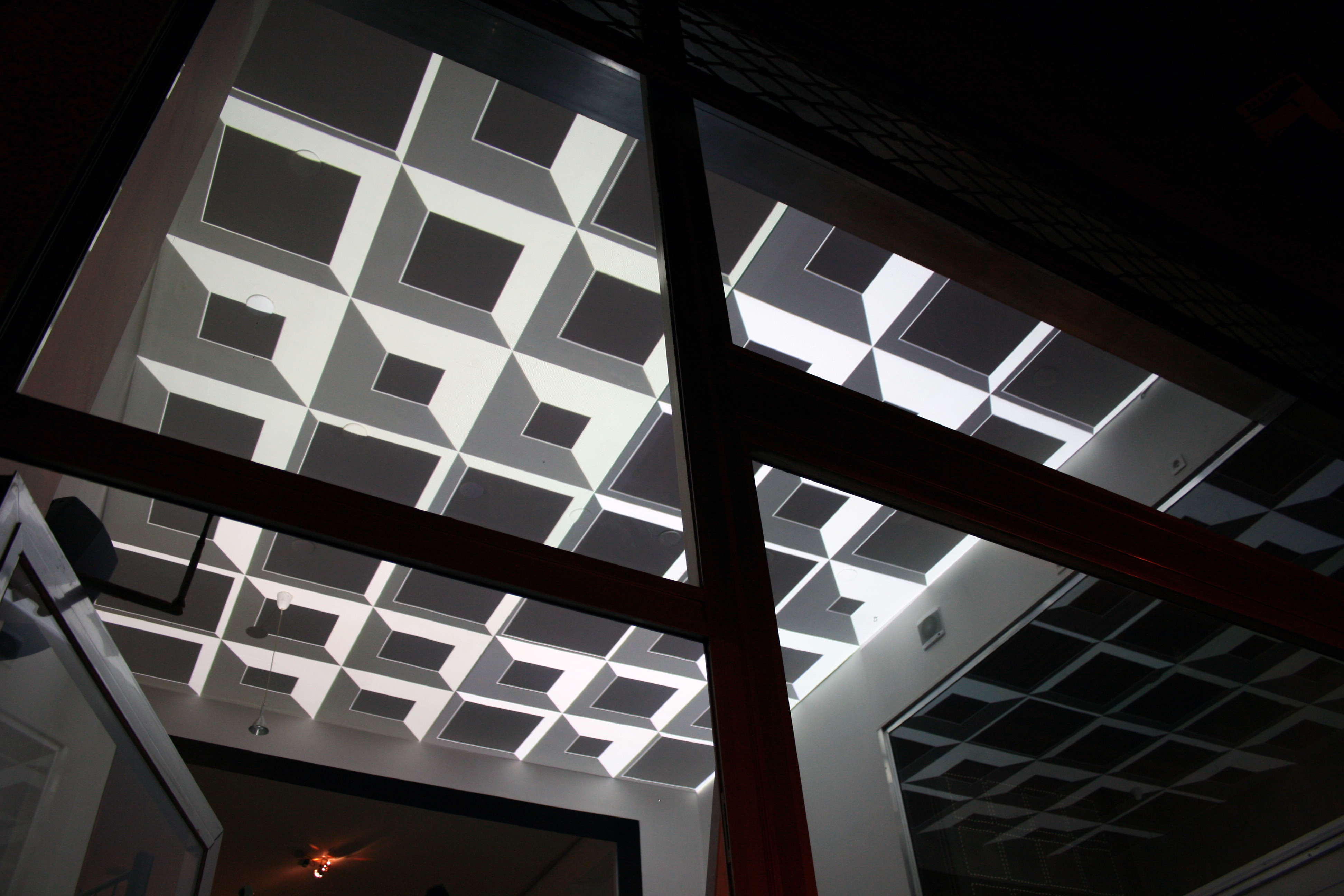
Cassette Ceiling, 2007

Computer animation, media players, projectors
Unique (site-specific), price and further details available on request
Dimensions: variable

Image Credits: Mediaruimte


Random Table Border, 2015

Website, domain name
Unique, courtesy Evan Roth Collection
Dimensions: variable

Refresh page to activate.
To view the work optimally, visit http://www.randomtableborder.com


The Computer as Studio (and Gallery)

Mouse Pointer, 2003

Website, domain name
Unique, courtesy Jonas Lund Collection
Dimensions: variable

Click once and move with mouse or trackpad. Laptop and desktop only.
To view the work optimally, visit http://www.mousepointer.name


Three Buttons, 2005

Website, domain name
Unique, price and further details available on request
Dimensions: variable

Use mouse or trackpad to click. Laptop and desktop only.
To view the work optimally, visit http://www.threebuttons.work


Blue Monochrome, 2008

Website, domain name
Unique, price and further details available on request
Dimensions: variable

To view the work optimally, visit http://www.bluemonochrome.com


Google Maps as a Sculpture, 2013

Website, domain name
Unique, price and further details available on request
Dimensions: variable

To view the work optimally, visit http://www.googlemapsasasculpture.com/index.html


On Digital Materiality – an essay

The most difficult thing about the whole piece for me was the statement. It was a kind of test—like when you say something out loud to see if you believe it. Once written down, I could see that the statement […] was on the one hand a totally silly idea and yet, on the other hand, I believed it. It’s true and not true at the same time. It depends on how you interpret it and how seriously you take yourself. For me it’s still a very strong thought. – Bruce Nauman on ‘The True Artist Helps the World by Revealing Mystic Truths

It was 1997, at the height of the net.art movement, when I got my first real shot of Internet heroin. I’d been playing around with digital techniques, even browser-based experiments at art school – I was fortunate to be accepted at the Rotterdam Art Academy, which had invested heavily in digital labs in the mid-nineties. But it wasn’t until I acquired my first XS4ALL hosting account, that the hit set in. On a midweek night, after uploading some HTML experiments to the web space of my account, I became a net artist. Standing in my brand new browser-based studio, public to the whole world, and feeling the electricity of a practically unexplored artistic realm and potential revolution, a new door had been permanently kicked open. I had read and seen work from the net.art movement and was already interested, but it was this moment that changed me from interested student to rookie net artist.

My background until then had been studying Architecture at the University of Delft, after which I enrolled at the Art Academy in Rotterdam. This combination of disciplines led to my practice including both making sculptural objects and installations, and also physically experiencing, often performatively, the objects to better understand their spatial and material properties. Examples from that time would be Untitled (1998), a paper sculpture I could crawl into, Seclusion (1998), a performance with a stack of Xerox paper, and Scotch Tape (1999), four short strips of scotch tape holding a pocket of air. I conceived of these works as investigative probes, materialized ideas that dealt with trying to question and understand materiality through making materially ambiguous sculptures, and interacting with them either conceptually or physically. This way of working used traditional materials and our preconceptions of the materials, twisting and stretching them to alter our perception. This resulted in my academic work experimenting with performance, interactive sculpture, projections, installations, drawings, etc.

During Art School I had introductory classes in coding, mainly in Macromedia Director and early versions of Flash. I became interested in simple procedural techniques, animation and interaction, but the graphic-oriented nature of these programs didn’t relate to my sculptural interest. We were also taught to make websites using Adobe PageMill, but the WYSIWYG nature of this editor made it feel like a DTP tool for webpages, so again, not something that resonated with the sculptural works I was making at the time. However, it led to an interest in the underlying code of the browser, the HTML markup language. By copying parts of web projects I liked, (these not being editable in Adobe PageMill) forced me to start editing the code directly, which became my new default way of working in the browser space. This, ‘getting your hands dirty’, way of working, in combination with putting something online for the first time, resonated with my sculptural work in a totally new way.

Working in the fresh online public studio space, I began labeling my experiments ‘net-installations’. At first this was a perceptual description, as creating in the browser-space felt distinctly different to working in Photoshop. Photoshop is like a technical continuation of the painting tradition. Everything about the Photoshop experience is working on a surface: brushes, pencils, stamping, erasing, etc. Although the interaction is of a haptic nature, the result is basically an extension of painting. In contrast, working in HTML and the browser felt very similar to my studio practice of sculpture and installation: constructing within a space material compositions and sculptural constructions, which I could experience mentally and physically through direct physical interaction. Not an interaction like making a work in Photoshop, but a direct haptic experience of the work itself: I have never experienced a browser-based work the same as an image-file based work.

The materials I first used were basic HTML objects, buttons, scrollbars, frame borders, table borders, and also plain color fields and found images. I questioned what it was that rendered this practice similar to making installations rather than collages. At first it was the simulacrum of real world interactive elements (buttons, window frames, etc.). The operating system extended this haptic strategy with traditional paper-based forms, like check boxes, text fields, lists, etc, and, along with the form elements and the interactive document, led to an ecosystem of fake 3D, interactive objects.

Adding user-interaction to the tradition of trompe l’oeil, uniquely combined within the computer, formed the base of this browser-based sculptural environment. In contrast, I also began adding random animation techniques, which lifted the objects out of their passive, waiting stillness, like in Tires (1999). This enhanced the autonomy of the object and relieved the viewer of the need to interact (break the click habit).

All these materials were made with code, in contrast to drawing them in Photoshop. Using a simple text editor, I would type HTML code and JavaScript, then, after saving the file, I would switch to the browser to view the executed code, then go back and forth, repeating these steps to make the work. This switching of spaces, from the ‘back’, the textual instruction or invocation, to the ‘front’, the execution or manifestation of this text (code) as a website was key in my experience of the spatial character of browser-based working. A subjective, maker’s point of view, but one that has been expressed in works such as Jodi’s wwwwwwwww.jodi.org (1995) and my own Portrait of a Webserver (2013) or Source Code Mirroring Itself (2013) – in these works viewing the source code alongside the website enriches the experience of the work and reinforces the idea that the work consists of the two elements.

Another switch in space is the transfer from the local computer space to the public server space. By putting the files on a webserver, they become publicly accessible. It’s like relocating the work from your studio space to a gallery. Only in this case the whole studio is taken along. It’s more like opening your studio to the public. These moves between the different spaces and working in the browser intuitively extended my work as installation artist. It also captured the ambiguity of materiality in a much more exciting and new way.

From a phenomenological viewpoint, my experience of an interface button in a website or a wooden plank in a studio was the same. One of the first online materials I started using was the scrollbar. By making huge empty pages and putting them in framesets, I isolated the scrollbars and presented them in minimalistic compositions. From 1999 to 2002, the first years after art school graduation, I worked exclusively on the net. Following extensive online studies and experiments, the scrollbar thread culminated in the saturated Scrollbar Composition (2000).

In 2002 I began to realize that the online audience was misreading my work. Visitors would sometimes interpret my work as an intentional aggravation for the user or even subversive. To me, the browser-based context was a gallery space, and work within this context was to be perceived in a manner similar to any physical gallery space, i.e. with attention and reflection. But this was not how the Internet worked; it was a highly impatient, click-based environment. Consequently, I decided that it was the effect of the medium – the Internet – that created these unintended connotations and, thus, took the installations out of the browser and into the physical gallery.

This shifting to physical space was a very effective way of dispensing with this problem. An early experience of exhibiting net art in a gallery context was the website Scrollbars (1997), a work I showed in my graduation show as Scrollbars, floor piece (1999). This hadn’t worked, as people weren’t ready to read this as sculpture. The first successful attempt I produced was Scrollbar (2002). Projecting an isolated scrollbar onto a strip of wood made the hoped for impact. People took time to engage with the piece, become confused and let the new materiality soak in. Scrollbar (2002) marked a new important direction in my Internet-related art practice.

During the period of making online pieces only, I worked on both Windows and Macintosh computers, more specifically on the Windows 95 and 98, and Mac OS 8 and 9 operating systems. I made the choice to produce the physical works using the Windows interface, due to its minimalist design and widespread use (it being the industry standard at the time). The design stuck with me, I consistently used it until the installation Scrollbar Composition (2005).

A long time later, in 2011, when I revisited the scrollbar, I realized that the constant evolution of the interface was a fundamental material aspect of this proprietary, yet public, material. It was in a continuous fluid metamorphosis, both on the level of code and the material design. After this point I started showing scrollbar pieces in different interface versions, for example Scrollbar Composition 2011 (2011) and Scrollbar Composition 2013 (2013). In 2016, in response to this fluidity, and to capture the evolution, of Scrollbar Composition (2000), at the Whitechapel gallery’s exhibition The Electronic Superhighway, conservator Dragan Espenschied, the others at Rhizome and I decided to exhibit a triptych, in which each panel used a different operating system to show the work – Windows 95, Mac OS X 10.6 (also known as the aqua interface) and Mac OS X 10.10.

This fluidity and evolution has been described as the performative nature of the Internet. The transformations and decay of net-based art give them the aspect of a time-based performance. Even as some works have survived the Internet from the very beginning, the conditions in which they originally where shown, have changed; the browsers have evolved, the works have become visible on mobile devices, the display resolutions have become higher, but most of all the net cultural, economic and political context has changed, like works embedded in social media. The most recent steps in dealing with this history of passing sculptural materials are the works In Memory of New Materials Gone (2014) and Dumpster (2016).

In the time between 2005 and 2011, while the scrollbar theme was on hold, I was working on other key materials in my work, the HTML table border, the bevel and the Photoshop selection marquee. The HTML table border is another of the browser-based materials I took with me in 2002 into the physical context, from the projection Untitled Work (2002) to the sculpture Untitled Work (2004) to the site-specific installations Cassette Ceiling (2006, 2007) and many adaptations in between. The table border went full circle returning to the net in the website Random Table Border (2015).

I preferred the aesthetics of the Windows classic interface design because of its minimalistic design – no rounded corners and ribbings like the OS 9 design, but simple beveled grey rectangles, and a button object was merely a highlight and a shadow, nothing more. These design principles and their offspring, the drop shadows, defined the aesthetics of the operating system,

I was already applying table borders as traditional architectural ornamentation in the manner of cassette ceilings and wall paneling, when, during a residency at the Museum Quartier in Vienna in 2006, I started to use the bevel as a distilled digital base material. During this residency, I also explored the relationships between browser interface objects, architectural ornamentation and ideas of digital materiality. This led me to begin considering how our ideas of the sublime and of performance and the stage could be extended into the digital realm – the digital stage and the interface as stage set. This culminated in the investigative manifesto The Silent Ornamental Revolution (2006) and the image-based interventions Untitled Ornaments (2006) – procedural works developed in Flash, followed by projected site-specific works. The simulated ornamental bevels would be flipped from a positive to a negative state randomly in time, creating a living augmented ornamentation. In Alexandria, Egypt this resulted in Ornaments (Alexandria), (2006). A later version, emphasizing the interface as stage set, was Ornaments (Rotterdam II) (2009). The most recent execution of this series is Ornament (Amsterdam) (2016).

Projecting in the physical space had the advantage of literally bringing the digital materiality, in all its bits and pixels, connected to the net and processed in real time, to the physical space. The disadvantage was that the projection introduced a layer of light that augmented the gallery space and the light’s dominance prevented the work blending into the ambiance of the space – a level of cinematic reference fundamentally rendering the work ‘elsewhere’.

The installation Three Spaces (2006), made together with sound artist Martijn Tellinga, was my first attempt to overcome this problem. The three spaces involved were the space of sound, the space of the digital, and a new hybrid space, where the digital materiality was manifested in a non-electronic way. I painted two monumental murals of table borders in different states of random generation. The table borders became stills, but the materiality upheld, and the blending into the physical space was a big gain. Having taken this step, I applied this method in more projects, notably Inverted Relief on Door (2008) using tape and The Silent Ornamental Revolution (2008) applying urban postering.

Though the painting itself (as an object) defines its materiality, perception and artistic tradition, the act of making includes many others. The act is time-based and performative, the tools are sculptural in nature and the setting could be a site-specific intervention. Interfacing with computer software, I found these subsets to be particularly interesting over the commonly intended final result. Often I heard remarked that the computer was merely a tool to gain a result, whereas I experienced it as a studio in which I could engage and interact with the materials and objects. A space in which I could existentially relate to, feel, observe or simply just be. Examples of works mirroring this were Email (1998), Mouse Pointer (2003), Software Study (2004) and Three Buttons (2005).

One of these materials was the Photoshop selection marquee. The marquee, activated by dragging the mouse pointer, outlines a selected area with animated dashed lines, also known as marching ants. It is the digital equivalent of encircling something on paper with a pencil, though as with all digital materiality, much is different. Unlike the encircling with a pencil, the selection is decoupled from that which it is selecting; you can select over and over again, not leaving a mark on the document; the selection is autonomous. It’s like encircling something you see with your mind. And this was what excited me about this new stuff: it seemed to be a material manifestation of a cognitive process.

Note the use of the word “stuff”. It’s a term I use when the materiality in question is so exotic, it becomes hard to state in collectively objective terms, when to me it unequivocally exists.

I used the Photoshop selection marquee as a new base material in a series of gallery installations. The first and most elementary piece was Selection (2006) followed by more complex compositions and contexts, like Selections (2006) and Random Selections Objects (2015).

In 2008, I was introduced, by, amongst others, Harm van den Dorpel, Constant Dullaart and John Michael Boling (who invited me to join the Nasty Nets Internet surfing club), to the emerging second wave Internet art scene and given a crash course in the new generation’s approach to Internet art. Although there was a lot of overlap, the cultural differences were wide, and it took a couple of years of introspection to reposition my work.

In 2012, when the tendency was to show Internet-related work in the gallery space, I moved back to work solely on the net. I had become inspired by the new generation of Internet artists, as well as the dramatic developments in technology, culture and politics online.

One of the first online pieces that came out of this was Random Selection in Random Image (2012), which introduced the Photoshop selection marquee within a browser-based context – the work features a randomly generated selection marquee within an image randomly obtained from the net. This automated procedural work emphasised the idea of the autonomous character of the marquee and also, through the use of photographic images, brought home its Photoshop origin. Other fundamental studies of the materiality of the marquee within the online context are Selection as an Object (2013) and The Act of Selecting Objectified (2013). Similar to the Scrollbar Compositions series formal development of the base work Scrollbar (2002), the Photoshop Selection Marquee series explores the formal application of a base material. An example, which has also been shown as site-specific installation, is the web piece Concentric Selections of Gradient (2014).

The integration of live appropriated net-based third party images used in Random Selection in Random Image (2012) was done through the API (Application Program Interface) of the image database of Flickr. Using an API of third party net services, either proprietary or open source, is a typical development in web 2.0 technologies that changed the materiality of the net. The change was not only of a technological nature, but also one with cultural and political impact. Through an API you could integrate services in your work, with brand new material properties. The Google Maps API was one I started working with. Through it, you could sculpt Google Maps as material and use it for your work. The first piece I made was Blue Monochrome (2008). In the work I tried to merge Yves Klein’s ambitions seen in the contemporary post-Internet context with my own interest in sublimity and proprietary materiality. A second piece I made using the Google Maps API was Google Maps as a Sculpture (2013).

Currently, my work is very hybrid, works are executed in either the browser-based or the physical domain, and jump back and forward effortlessly. Over the years the materiality still hasn’t been cornered, but does move fluidly in and out of the net. To conclude with a recent work, which loops back to the Bruce Nauman quote at the beginning, and again trying to respond to Nauman’s work and text in the contemporary post-Internet condition, but also on a more personal level, in the context of two decades working with the ambiguity of materiality: The Immaterial Materialised (2014).

the-immaterial-materialised-diptych
The Immaterial Materialised, 2014

Silk screen on dibond, Website, domain name
Unique, price and further details available on request
Dimensions: variable


Image credits

All images by Jan Robert Leegte unless mentioned.


Biography

Jan Robert Leegte (born 1973, The Netherlands) started working as an artist on the Internet in 1997. In 2002, he shifted his main focus to implementing digital materials in the context of the physical gallery space, aiming to bridge the online art world with the gallery art world. In 2008, through exchanges with the upcoming next generation of Internet artists and inspired by the dramatic shift in online culture and technologies, he began refocusing on the web. As an artist Leegte explores the position of the new materials put forward by the (networked) computer. Photoshop selection marquees, scrollbars, Google Maps, code and software are dissected for their sculptural properties. He has exhibited widely, most recently in Electronic Superhighway, Whitechapel Gallery, London, UK, 2016.

Jan Robert Leegte lives and works in Amsterdam, the Netherlands.

Website: http://www.leegte.org

Facebook: https://www.facebook.com/leegte

Twitter: https://twitter.com/JanRobertLeegte

Instagram: https://instagram.com/leegte

Interviews with Feminist Porn Filmmakers

Lora Hristova

Interviews with Feminist Porn Filmmakers

2015, colour, sound, 27′

19 July – 25 July 2016

Interviews


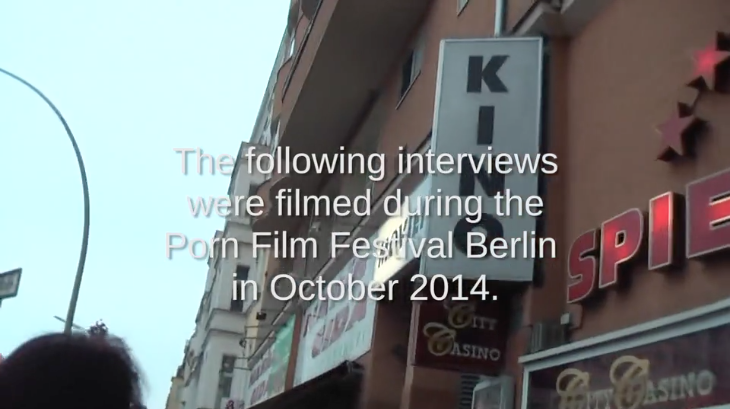
Interviews with Feminist Porn Film-makers is the final film in Carroll / Fletcher Onscreen’s Young Film-makers season – Holly Antrum, Margaret Haines, Lora Hristova, Cristina Picci, Lucy Parker and Jessica Sarah Rinland.  Filmed during the 2014 Berlin Porn Film Festival, Interviews with Feminist Porn Film-makers takes an impartial look at the motivations behind the work of ten porn film-makers  – Maria Bala, Pandora Blake, Lucie Blush, Alyx Fox, Audrey Fox, Shine Louise Houston, Jiz Lee, Petra Joy, Yvette Luhrs and Ms Naughty.

.

Biography

Lora Hristova (b.1987 Sliven, Bulgaria) works across mediums including video, text and collage to explore ideas around identity and human sexuality. Feminist theory and psychoanalysis inform her research into universal experiences of shame and desire. Much of her past work has appropriated from mainstream pornography and considers the cultural, psychological and social impact of the sex industry. In July 2013 she led a reading group called ‘The Price of Sex’ at Carroll/Fletcher gallery which discussed sexual politics, prostitution and human trafficking. After graduating from Central Saint Martins in 2009 she has exhibited across Europe and was invited to a solo show at The Zabludowicz Collection as part of their emerging artists ‘Invites’ programme. She was also part of ‘Feminist Practices in Dialogue’ exhibition at the ICA in London in 2016. Recently she has shown her work in the context of porn film festivals, with ‘Mouth Piece’ being nominated for the Short Film Competition at PornFilmFestival Berlin 2015 and ‘Feminist Porn Filmmakers’ winning Best Documentary Short at Cinekink 2016, New York. Her work is part of The University of the Arts Collection, The Zabludowicz Collection and private collections in London including those of Les Mes and Tracey Emin.

Artist website: http://lorahristova.com

Artist’s research archive: http://lorafound.com

Artist’s cv: http://lorahristova.com/exhibitions.html


Credits

Produced & Directed by: Lora Hristova
Filmed by: Lora Hristova & Kit Oates
Featuring footage from: Blue Artichoke Films, Blush Media, Bright Desire, Dreams of Spanking, DUSKTV!, Foxhouse Films, Pink & White Productions, Toytool Commitee
Music: “Unconquered Lands” written and performed by Natasha Gilbert, Produced by James Routh, “Cling to You” by Bear Beats & Stray Dog
Filmed on Location at: PornFilmFestival Berlin 2014, Kino Moviemento
 .

Why Do Porn Films Suck?, Petra van Brabant and Jesse Prinz

“When an item created using a traditional art medium incites strong emotions in us, that indicates, all else equal, that it is an artwork, and, indeed a good one. The capacity to arouse strong feelings is generally regarded as a mark of artistic achievement. Pornography is arguable more effective in inducting strong feelings than almost anything lining the walls of a typical museum. Pornography might even be said to elicit wonder, fear, and exhilaration. Its raw carnality takes us out of our comfort zones. It thrills, excites, and surprises. If these emotions are a strong indicator of the artistic, we should be disposed as well to see pornography as art. In fact, we should regard porn as good art, since it is extremely evocative.” (p.165)
.
“The offensiveness of porn stems from the fact that most of it is still produced for male consumption, and, in a male dominant society, that often involves depicting women in demeaning and objectifying ways. In addition, the production of typical porn often involves the subjugation of women, and consumption of it may cause societal harm by promoting harassment, domination, and violence.” (p.176)
.
“We have suggested that there is a double dissociation: an absence of artistic pretention in porn films, but also a neglect of pornography in art films. This is perhaps regrettable. The exploration of the artistic or aesthetic dimensions of a screening of sexual experiences can enrich or make our sexual gratification more complex. The result could be more layered sexual gratification.” (p.184)
.
“Standard pornography is excruciatingly formulaic. It has no more invention than the scratching gesture we use to remedy a passing itch. A good porn director, like a good lover, breaks from routine sexuality… adding emotional complexity, imposing a distinctive style, and violating genre conventions.” (p.184)
.
“Artistic porn is less morally problematic that conventional porn. First of all, it gives voice to sexualities that have been deemed deviant and silenced. Second, it would be less objectifying for performers… those involved can see themselves as part of the creative process rather than as a mere means to gratification. Third, to the extent that viewing conventional pornography promotes mistreatment of women, viewing art porn might help promote more progressive attitudes, by, for example, reversing traditional gender roles or otherwise complicated gender dichotomies that fuel patriarchy.” (p.188)
.
“We think the intersection of art film and pornography is underexplored, and that art and porn could be mutually reinforcing. The creativity associated with art could make sexual content more exciting and affecting, and the transgressive carnality of pornography could amplify artistic intensity and impact.” (p.189)
.

Carroll / Fletcher @ Close-Up Cinema – Sex: Work & Play

Screen Shot 2016-06-28 at 11.54.55 1 (1)

Image courtesy of Melanie Bonajo and AKINCI Amsterdam

Interviews with Feminist Porn Filmmakers was screened as part of Sex: Work & Play at Close-UP Cinema on 12 July.

Night Soil: Economy of Love, Melanie Bonajo, 2015, 33′

The second film in Boanjo’s Night Soil trilogy, Night Soil: Economy of Love portrays a Brooklyn-based movement of female sex workers who regard their work as a way for women to reclaim power in a male-dominated pleasure zone, their mission being to rearrange sexual conventions and ideas about intimacy itself. In the Night Soil trilogy, Bonajo documents phenomena that exist outside of, and act against global capitalism, and that suggest alternative, currently illegal, ethical models. The first film in the series, Night Soil: Fake Paradise, explores the therapeutic potential of the psychedelic plant ayahuasca. The third film, currently in production, Night Soil: Nocturnal Gardening questions the role of radical agriculture in a world of dwindling natural resources.

Horny Lil Feminist, Ann Hirsch, 2015, 10′

A series of five short films, “[to the Star Trek theme tune] Art, the final frontier, these are the voyages of the horny lil feminist, my continuing mission to explore internet feminisms, to break down existing stereotypes by suggesting new modes of representation, to boldly go where no horny little feminist has gone before…” Ann Hirsch.

Interviews with Feminist Porn Film-makers, Lore Hristova, 2015, 27′

Filmed during the 2014 Berlin Porn Film Festival, Interviews with Feminist Porn Film-makers takes an impartial look at the motivations behind the work of five porn film-makers  – Pandora Blake, Lucie Blush, Audrey Fox, Jiz Lee and Ms Naughty.

Followed by a discussion between:

– Lora Hristova (artist);

– Petra van Brabandt (philosopher);

– Stacey Clare (the Ethical Stripper)

Melanie Bonajo

http://www.melaniebonajo.com

“Melanie Bonajo is an artist working with performance, installations, music and photography. Her works address themes of eroding intimacy and isolation in an increasingly sterile, technological world. Her experimental documentaries often explore communities living or working on the margins of society, either through illegal means or cultural exclusion. Her work has been exhibited and screened internationally, from De Appel Arts Centre and Stedelijk Museum in Amsterdam to the Center for Contemporary Art, Warsaw, the Moscow Biennial, the Berlinale, the International Film Festival Rotterdam, and Treefort Film Festival.” Courtesy Wikipedia.

http://night-soil.tumblr.com

http://www.zazazozo.com

Ann Hirsch

http://therealannhirsch.com

“Ann Hirsch is a video and performance artist, who examines the influence of technology on popular culture and gender. Her immersive research has included becoming a YouTube camwhore with over two million video views and an appearance as a contestant on Frank the Entertainer…In a Basement Affair on Vh1. She was awarded a Rhizome commission for her two-person play Playground, which debuted in the US at New Museum and in the UK at South London Gallery. Recent solo shows include MIT List Visual Arts Center and the New Museum’s online project space First Look.” From http://therealannhirsch.com.

Stacey Clare

http://ethicalstripper.com/site/the-collective/stacey-clare

“Stacey has been stripping for almost a decade, and has mastered the art of pole dancing. Before stripping, Stacey was a political rebel fighting for social justice and experiencing every protest/direct action as a performance. Her anarchist roots have led her to apply her political views to her choice of work. She believes that stripping is legitimate work and deserves to be regulated and protected as such. She is tirelessly campaigning with the ELSC to challenge stigma and stereotypes about strippers, and to start empowering dancers by bringing them together to self-organise and create their own working conditions.” From http://ethicalstripper.com/site/the-collective/stacey-clare

TED Talk: https://www.youtube.com/watch?v=kZQkIw1MH3E

Petra van Brabandt

Petra Van Brabandt currently teaches care ethics at Ghent University and semiotics, art theory and cultural criticism at St Lucas School of Art and Design, Antwerp. Her research interests are in social and moral philosophy, David Hume, feminist philosophy, art and society, and art and pornography. She writes on David Hume’s ‘A Dialogue’, care ethics, pornographic art, narrativity in art and female artists. Van Brabandt co-wrote with Jesse Prinz Why do porn films suck? in Art and Pornography, OUP, 2012.