Carroll / Fletcher

Evan Roth

n50.204520e1.538171.fr

.

9 November – 30 November


“The project started as a venture to find the Internet, but has slowly changed to the relationship between data and the landscape, and then again to the relationship between the self and nature.” Evan Roth.


n50.204520e1.538171.fr, Evan Roth, 2016, Network located video, 18:00, Unique, Price on application

 .

Introduction

n50.204520e1.538171.fr follows on from Evan Roth’s solo exhibition Landscapes on Carroll / Fletcher Onscreen, 28 June – 28 July 2016. A physical counterpart to the work is included in the exhibition Looking at one thing and thinking of something else, Part one: Dialogues with Art History, Carroll / Fletcher Eastcastle Street, 11 November – 26 November 2016 (the online exhibition can be viewed here and details of the physical exhibition can be found here).

The work forms part of Roth’s Landscapes series, which first featured in his solo exhibition, Voices over the Horizon, at Carroll / Fletcher’s Eastcastle Street space in Spring 2015. The series began as a pilgrimage to a remote area of Cornwall, on the south-western tip of the UK, where the trans-Atlantic fibre-optic cables that carry the Internet emerge from the ocean; a quest to rediscover the optimism, inspiration and sense of community he had found in the Internet’s early days. His pilgrimage has continued with journeys to Internet landing sites in Australia, France, New Zealand and Sweden – n50.204520e1.538171.fr was filmed at Saint-Valery-sur-Somme along the North coast of France.

During his explorations, the project evolved from his initial specific concerns with changes in the structure of and our relationship with the Internet, to a more general meditation on our relationship with and the impact on our lives of the physical, digital and cultural landscape:

“The longer I work on this new series, the more peripheral the Internet becomes in my thinking. I’ve been using the phrase “Internet landscapes” to informally describe the work, but lately I’ve been dropping the “Internet” and just calling them “landscapes” (which I think is more true to what they are). Even though the Internet is a strong character in the narrative, the work is really more about the questioning of my surroundings and search for solutions to issues that fundamentally challenge my art practice and worldview.” Evan Roth in The Black Chamber – surveillance, paranoia, invisibility & the internet, interview with Domenico Quaranta, Bani Brusadin and Ruth McCollough.

.

n50.204520e1.538171.fr

Although the work begins with a journey by the artist to the landfall site of an undersea Internet cable and a single, continuous static shot film of the landscape (for n50.204520e1.538171.fr, Roth visited Saint-Valery-sur-Somme and shot an 18 minute film), the work itself consists of a digital file of the film located on a web server situated near the landfall site, displayed on a website with a URL web address made up of the GPS co-ordinates of where the camera filmed the landscape, and of the server hosting the video – for n50.204520e1.538171.fr, n50.204520e1.538171 are the GPS co-ordinates and .fr locates the server in France – and, for Roth, the work is only completed when the website is viewed by an audience, i.e. when an infra-red signal travels along the cables from the server hosting the digital file of the film, to the viewer’s computer which displays the film in their browser – the work is the film, plus the network, plus the viewer.

“Visiting the Internet physically is an attempt to repair a relationship that has changed dramatically as the Internet becomes more centralized, monetized and a mechanism for global government spying. Through understanding and experiencing the Internet’s physicality, one comes to understand the network not as a mythical cloud, but as a human made and controlled system of wires and computers.”  Evan Roth in Domenico Quaranta, Internet Landscapes.  A Journey in Space and Time, in Evan Roth, Kites & Websites, 2016.

Roth films the landscape using infra-red light, a reference to the infra-red light that transmits the signal along the Internet’s fibre-optic cables and to surveillance cameras. The images are accompanied by a two-channel audio track; one channel being the ambient sounds of nature and the other from custom-designed hardware that scans radio frequencies in sync with the artist’s heartbeat. Both the camera and audio-recorder are based on equipment used in ghost hunting.

.

A still from n50.186091e1.643751, courtesy Evan Roth

.

“I would also point out that there are things happening within the frame. On first glance it seems as if nothing is going on, but you should be able to notice subtle changes in light as clouds pass in front of the sun, animals, people, airplanes and boats moving in and out of frame, and changes in the wind and wave patterns. These aren’t ‘actions’ as we are used to actions in a typical Internet experience, but actions in nature. I also think there is a performance aspect in watching the piece from start to finish. All of the things that might happen during that period (email notifications, SMS messages, incoming tweets, your impulse to move the mouse so you can see how much time is left) are all a part of the viewing experience. These clips, which are typically shorter than the length of a TED talk, can seem like an eternity to watch in their entirety (especially when viewed in the privacy of your own browser).”  Evan Roth, in Domenico Quaranta, Internet Landscape  A Journey in Space and Time, in Evan Roth, Kites & Websites, 2016.

.

n50.204520e1.538171.fr – an expanded experience

If the viewer pastes the co-ordinates n50.204520e1.538171 into the search bar of Google Maps, an alternative exploration of the location is possible.

The route taken by the infra-red signal from the viewer’s computer to the web server can be followed using the computer’s terminal window: with the website open on the screen, go to the computer’s terminal window – /Applications/Utilities/Terminal on Macs or /Programs/Accessories/Command Prompt on PCs – paste the following line and hit return: traceroute n50.204520e1.538171.fr (for Macs) or tracert n50.204520e1.538171.fr (for PCs). Alternatively, James Bridle’s Citizen Ex – http://citizen-ex.com/ – can be used.

Another dimension of the work can be experienced  through the source code: in the Chrome menu bar, go to: View/Developer/View Source; Firefox menu bar: Tools/Web Developer/Page Source; Safari menu bar: Safari/Preferences/Advanced, check show Develop Menu in menu bar Develop/Show Page Source (more details can be found here).

.

A step by step guide to installing n50.204520e1.538171.fr at home

In making the image larger than the browser window, Roth encourages the viewer to navigate around the website using the scroll bar. A detailed exploration reveals a small blue forward slash in the top left corner of the image. This character, known as a path, is used extensively in computer science to specify a unique location in a file system. This path functions as a direct link to the video file on the server: http://n50.204520e1.538171.fr/packets.mp4

Here the video can be viewed to the size of the screen, framed by a black border (it is best viewed full screen without the bookmarks bar or toolbar) and, if mounted on a wall, it becomes reminiscent of a traditional landscape painting.

.

.

Collecting the work

Each landscape in the series is a unique work.  On purchasing the work the collector receives a monitor, a networked media player, cables, ownership of the lease to the URL and digital files of the video.  The purchase is covered by a sales contract (viewable here).

.

Bio

Evan Roth is an American artist based in Paris whose practice visualises and archives culture through unintended uses of technologies. Creating prints, sculptures, videos and websites, his work explores the relationship between misuse and empowerment and the effect that philosophies from hacker communities can have when applied to digital and non-digital systems.

His work is in the public collections of the Museum of Modern Art, New York, and the Israel Museum. Recent exhibitions include the 2016 Biennale of Sydney; Electronic Superhighway (2016-1966) at Whitechapel Gallery, London; and This Is for Everyone at the Museum of Modern Art, New York. Roth co-founded the arts organisations Graffiti Research Lab and the Free Art and Technology Lab and in 2016 was a recipient of Creative Capital funding.

.

Links

Related texts:

Kites & Websites, Evan Roth with text from Domenico Quaranta
The Black Chamber – surveillance, paranoia, invisibility & the internet
, interview with Domenico Quaranta, Bani Brusadin and Ruth McCollough (full exhibition catalogue here).
Infra-red Wuthering Heights, interview with Filippo Lorenzin in Digicult magazine.

Related exhibitions:

Voices Over the Horizon
The Black Chamber
Internet Landscapes: Sydney
Kites & Websites

Related works:

Total Internal Reflection
Kites

Related articles:

http://next.liberation.fr/culture/2015/03/26/evan-roth-debris-de-fond_1228978
http://thecreatorsproject.vice.com/blog/evan-roth-physical-internet-ghost-hunting
http://www.wired.com/2015/03/exploring-internet-ghost-hunting-equipment/
http://hyperallergic.com/283973/a-pioneering-net-artist-mourns-the-unfulfilled-promise-of-the-internet
http://mashable.com/2016/03/15/evan-roth-biennale-sydney/#bU98Tus1Zuqw
http://www.fastcodesign.com/3058543/making-it/the-mysterious-infrastructure-of-the-internet-made-visible/1

“The filming requires me to be still in these locations for periods of 10 to­ 20 minutes at a time, and what I found during these moments of stillness was that I really wanted to check my inbox. After 30 seconds I would instinctively reach for my pocket to see what was happening on email/twitter/instagram. I remember one time I was filming on top of a cliff in Sweden looking out over the water and whales started coming up for air. It was so quiet that the sounds of their breaths were strikingly loud. Despite this being one of the most beautiful moments I’ve had in nature, I was disappointed in myself as I went from witnessing this sublime moment, to feeling slightly bored, and then finally questioning whether I should post it on Instagram, all within the course of two minutes… Part of what interests me in the Internet Landscape series is the struggle to take more control over my relationship with time and how it is connected to the consumption of media, nature and the moments when I am not being social (online or in person).”  Evan Roth, Infra-red Wuthering Heights, interview with Filippo Lorenzin, Digicult magazine.
Sarah Wood

Sarah Wood

4 October – 31 October

For Cultural Purposes Only

2009, 8’16”


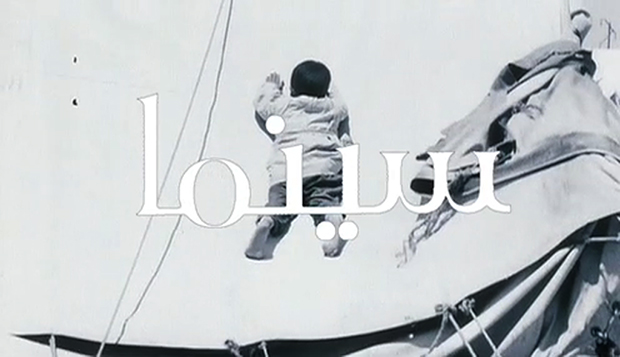
To coincide with Basel Abbas and Ruanne Abou-Rahme’s multi-media installation, And yet my mask is powerful (2016), in our Eastcastle St. space, the final film in Carroll / Fletcher Onscreen’s short season of Sarah Wood’s films is For Cultural Purposes Only (2009) (courtesy of the Artist and Animate Projects).

In an age dominated by the moving image what would it feel like to never see an image of the place that you came from?

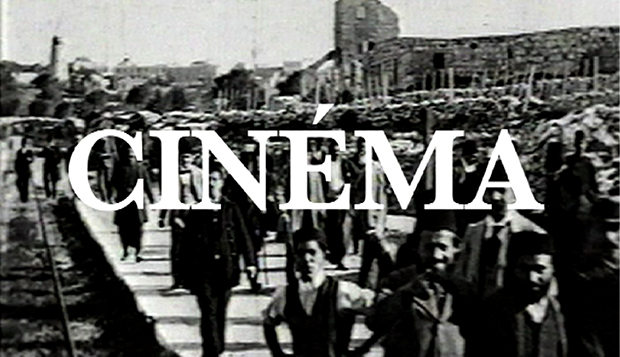
The Palestinian Film Archive contained over 100 films showing the daily life and struggle of the Palestinian people. It was lost in the Israeli siege of Beirut in 1982. Here interviewees describe from memory key moments from the history of Palestinian cinema. These scenes are drawn and animated. Where film survives, the artist’s impressions are corroborated.

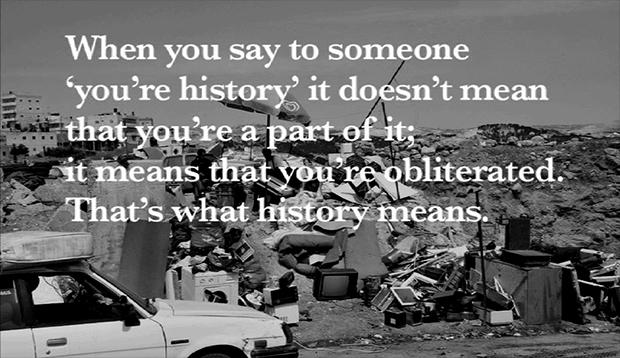
“When you say to someone ‘you’re history’ it doesn’t mean that you’re part of it; it means that you’re obliterated. That’s what history means.” From For Cultural Purposes Only.

“‘For cultural purposes only, no commercial value’ is the phrase that is written on customs forms when films prints are sent internationally. The declaration is intended to speed a film’s journey through the customs process. Some time ago, I came across an article that the filmmaker Annemarie Jacir had written about her experience of curating a festival of Palestinian film in New York. In the article she talked about the practicalities of curating, and the difficulties of physically getting material across the world to screen in the US. Films sent from Palestine were simply going missing in transit. One film lost in the post might seem like a mistake but after a little detective work she realised films that she was certain had been sent from Palestine weren’t making it through Israeli customs. She realised that what singled the missing films out was their customs declaration. Instead of being something that facilitated movement, the simple statement ‘for cultural purposes only’ was being read and used as a means of gauging the content of the package and preventing their movement out of the country. I was very struck by this story, not only for the inhibition of the movement of art but also the added layer of meaning that the phrase had gathered. One of the striking things about the conflict between Israel and Palestine is the use of language by both sides to blur understanding and control the narrative of the conflict. I’m thinking, for instance, of the use by Israeli officialdom of ‘targeted killing’ to mean an assassination, or the use of ‘martyr’ by Palestinians to describe the same event. Both are euphemisms, both are used to control the effect of the act. Seeing the phrases ‘for cultural purposes only’ reinterpreted in this conflict made me question how hard it would be to create any art in the context of this double-think… [more here]” Sarah Wood (courtesy Dazed Digital).

fcpolumierejerusalem

Sarah Wood discussing For Cultural Purposes Only in The Guardian

“I am an artist who works with found footage, making films from other people’s films – an act of reclamation and reinterpretation. In the west, this footage is ubiquitous. It wouldn’t be hard for me, for instance, to find an image of the place I come from to show to a stranger; I just have to know where to look. So imagine what it would be like if every image of 1960s London, or of pre-war France, or Soviet Russia, vanished overnight. Imagine there was no footage of your home town. In an age dominated by the moving image, how would that vanishing act make you feel?…”

The full article can be read here.

Courtesy The Guardian.

A 2009 update: Drawing Reality

I’m sitting indoors, looking out of the window at the whited-out world. A sudden snowfall has shocked Britain to a standstill. Everyone’s complaining. Trains don’t work, buses don’t work, things are going wrong. Commentators are scandalized on television as it’s revealed that Britain is running out of salt to grit the roads. More salt will have to be mined! Standstill!

Outside the snow world looks still and calm. Sound is muffled by the snow. Outside sounds like a thud. The language of TV panic seems entirely at odds with this stillness.

It’s only a few weeks ago since I watched Tzipi Livni announce on TV that Israel was to ‘change the reality’ of Gaza. As suddenly as this snowfall altered Britain, the lives and landscape of Gaza were altered by military action. Reality was ‘changed’. The snow has now nudged Gaza off the headlines. TV landscape has been whited out too.

The full update can be read here

Courtesy Animate Projects.

fcpoalzubaidicinema

Bio

Sarah Wood works with the found object, particularly the still and moving image, as an act of reclamation and re-interrogation. She works mainly with the documentary image to interrogate the relationship between the narrating of history and individual memory.  Recently she’s been focusing on the meaning of the archive, in particular the politics of memory, asking not only why some objects are preserved while others are ignored but also why preservation is made at certain historical moments.  Wood also work with artists’ film as a curator.  With Selina Robertson she co-founded Club des Femmes,  a positive female space for the re-examination of ideas through women’s art.

Filmography

Athos, 2016

Boat People, 2016

Murmuration x 10, 2015

I Am A Spy, 2014

Three Minute Warning, 2012

For Cultural Purposes Only, 2009

The Angel of History, 2008

The Book of Love, 2008

I Want To Be A Secretary, 2006

Surrender, 2005

Manifesto For Love, 2003

Living Space, 2003

More details here.

Links

Sarah Wood’s website

BFI article discussing I Am A Spy, Three Minute Warning and Murmuration x 10

“I am writing these notes during a time of war, in a country that’s at war, unofficially. Britain did not declare war on Afghanistan under the Taliban in 2001 or Iraq under Saddam Hussein in 2003. It has not officially declared war on another country since the 1940s. War, it would seem, has shifted from a state of legality to a state of being: a kind of banally ubiquitous constant as Orwell describes above in the fiction of Nineteen Eighty-four… [read more here].”  From Sarah Wood’s unpublished artist’s notes on I Am A Spy and other recent works (courtesy The Essay Film Festival).

“For my part, I am concerned with retracing the steps that led to our current visual framing and to express the near-hidden history that used the experience of British birdlife and its habitat as a frame for the way British surveillance has been conducted in the century just past, and how it is still conducted in the 21st century. With its own ironic inversion, this project is also a questioning of how we, as a surveilled society, behave when we ourselves watch the freed-up movement of birds… [read more here].”  Sarah Wood (courtesy of Resurgence & Ecologist).

Dazed Digital Interview 

Sight & Sound article 

Animate interview discussing For Cultural Purposes Only

Animate – For Cultural Purposes Only film page 

Credits

Director – Sarah Wood

Illustration – Woodrow Phoenix

Animation – Kate Anderson

Photography  -Ruanne Abou-Rahme

Cartography – Simon Deeves

Soundtrack – Basel Abbas

Editor – Lucy Harris

Research – Kate Daniels

Camera – Campbell

Online Editor – Sue Giovanni

Sound – Andy Coles

Executive Producers Jacqui Davies & Gary Thomas

Extract from Children Nevertheless © Khadijeh Habashneh

Extract from Far From the Homeland © Kais Al-Zubaidi

Extract from Leaving Jerusalem by Railway (Louis Lumiere, 1897), Courtesy of the Prelinger Archive, (www.archive.org)

Extract from Screen Traveller: Damscus and Jerusalem (1926), Courtesy of the Prelinger Archive, (www.archive.org)

Text – Mustafa Abu Ali, Palestinian Cinema Group Manifesto, Edward Said

Title – Courtesy of Annemarie Jacir taken from her essay of the same name

Thank you: Mustafa Abu Ali, Abigail Addison, Sonia Bridge, Nick Denes, Nicky Haire, Bridget Hannigan, Shadia Nasralla, Idit Nathan, On Sight, Judy Price, Ali Smith

Courtesy: Animate Projects

fcpotvdump

Sarah Wood

Sarah Wood

Three Minute Warning

2012, 3′

27 September – 3 October

threeminuteaeroplane


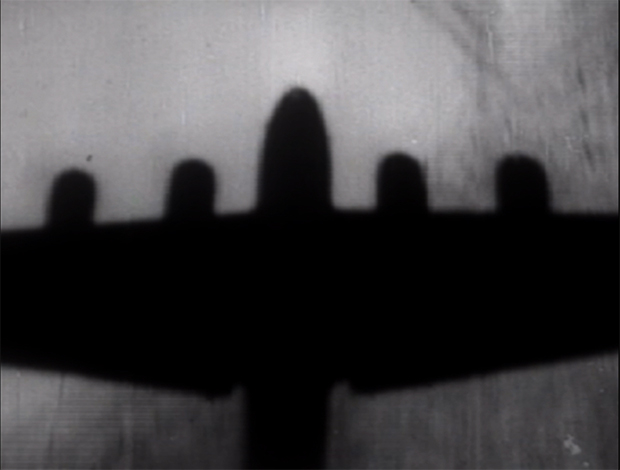
The parallel histories of cinema and aviation re-shaped the twentieth century, generating irresistible fantasies of freedom and control. Three Minute Warning is a fast-forward history of the real impact of blue-sky thinking. You’ve had your three minute warning: now is it time to resist?


Credits

Director: Sarah Wood

Editor: Lucy Harris

Online editor: Sue Giovanni

Commissioned by Jacqui Davies for FACT for Channel 4’s Random Acts series.


three-minute-warning1c

.

Bio

Sarah Wood works with the found object, particularly the still and moving image, as an act of reclamation and re-interrogation. She works mainly with the documentary image to interrogate the relationship between the narrating of history and individual memory.  Recently she’s been focusing on the meaning of the archive, in particular the politics of memory, asking not only why some objects are preserved while others are ignored but also why preservation is made at certain historical moments.  Wood also work with artists’ film as a curator.  With Selina Robertson she co-founded Club des Femmes,  a positive female space for the re-examination of ideas through women’s art.

Filmography

Athos, 2016

Boat People, 2016

Murmuration x 10, 2015

I Am A Spy, 2014

Three Minute Warning, 2012

For Cultural Purposes Only, 2009

The Angel of History, 2008

The Book of Love, 2008

I Want To Be A Secretary, 2006

Surrender, 2005

Manifesto For Love, 2003

Living Space, 2003

More details here.


three-minute-warning2a

.

Links

Sarah Wood’s website

BFI article discussing I Am A Spy, Three Minute Warning and Murmuration x 10

“I am writing these notes during a time of war, in a country that’s at war, unofficially. Britain did not declare war on Afghanistan under the Taliban in 2001 or Iraq under Saddam Hussein in 2003. It has not officially declared war on another country since the 1940s. War, it would seem, has shifted from a state of legality to a state of being: a kind of banally ubiquitous constant as Orwell describes above in the fiction of Nineteen Eighty-four… [read more here].”  From Sarah Wood’s unpublished artist’s notes on I Am A Spy and other recent works (courtesy The Essay Film Festival).

“For my part, I am concerned with retracing the steps that led to our current visual framing and to express the near-hidden history that used the experience of British birdlife and its habitat as a frame for the way British surveillance has been conducted in the century just past, and how it is still conducted in the 21st century. With its own ironic inversion, this project is also a questioning of how we, as a surveilled society, behave when we ourselves watch the freed-up movement of birds… [read more here].”  Sarah Wood (courtesy of Resurgence & Ecologist).


“I hadn’t realised how angry I could be.  For the first time I had found out how to resist.  When I remember this I can sleep and this is what I dream…”  From Three Minute Warning.