Carroll / Fletcher

Fatima’s Letter

Alia Syed, Fatima's Letter, 1992

Alia Syed

18 – 27 August

Fatima’s Letter

1992; dv from16mm film; b&w, sound, 4:3; 21 mins


SYNOPSIS

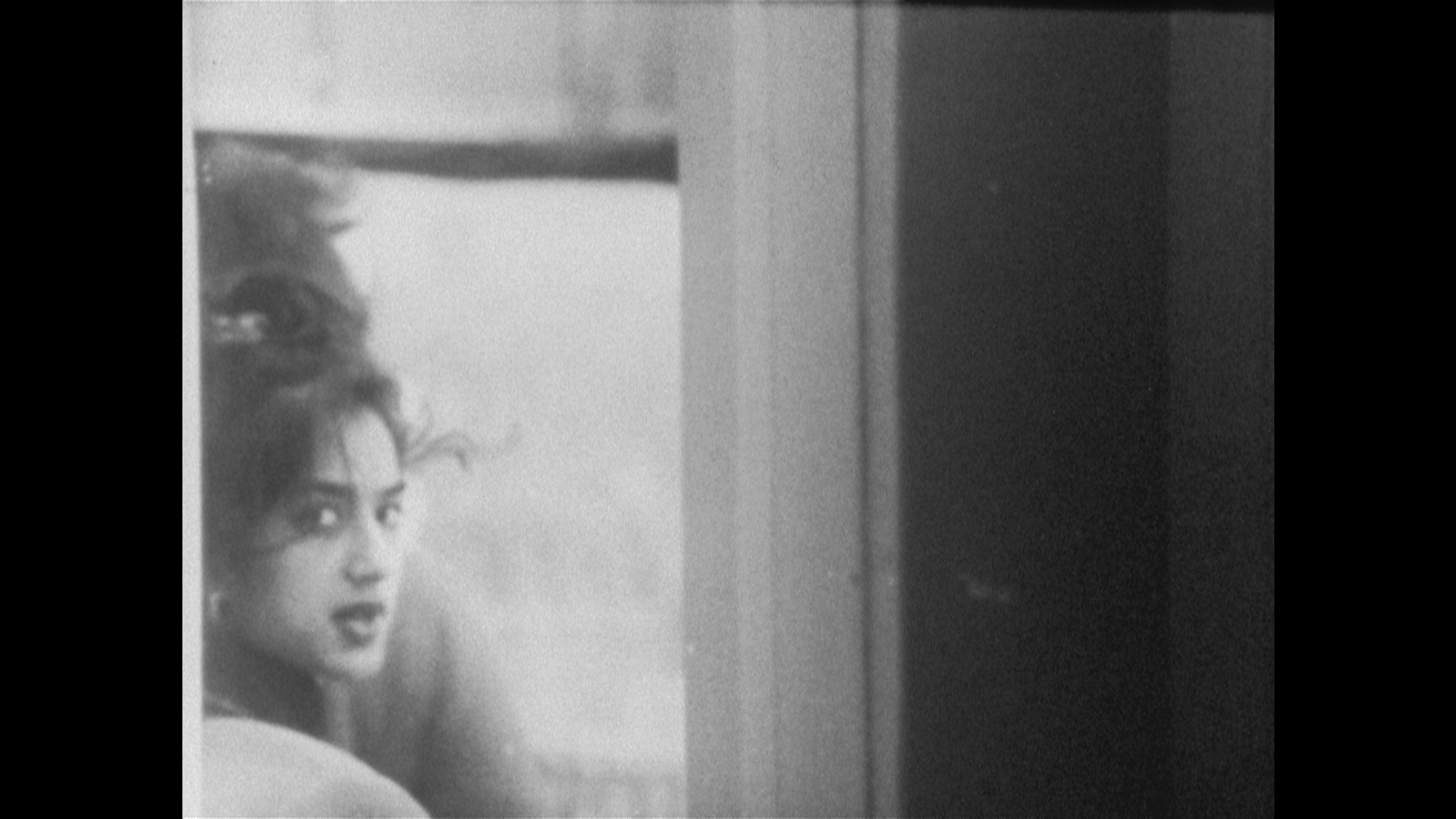
A woman remembers her past by faces she sees while travelling on the London Underground. She begins to believe that these people, like her, have all taken part in the same event. She composes a letter to her friend Fatima – a personal documentary around journeys, memories and watching. The story is spoken in Urdu with sub-titles in English, although the subtitles do not always appear in conjunction with what is spoken.


DIASPORA – Alia Syed on time, memory, and story telling

The near has fallen behind the horizon – reality always juggles with ghosts – the gate of the camera – my net. Deciphering the original intent from the palpable reality of the footage – frames pass me by, London by night. It rains. The metropolis still holds me. I grew up with the hills visible from the skylight in my bedroom – a secret cigarette – our laughter mingling with the soft rain of a suburban Scottish night. I removed myself – the space stifled me. London was negotiated from the tube map. I became Scottish, but suffered from agoraphobia.

From New Cross Gate to Hoxton, seamless, the journey allows me to be somewhere else. Faces take on significance. London has to be traversed across. Recognition comes in bullets. External events collide – in my head – a moment of clarity. I devote time to travelling. We look through siphons; our attempts at observation are attempts to connect. Making becomes an endless process of re-looking, of trying to find meaning – a point where I locate. London is never London, but contains traces of other cities; the poignancy of the landscape lies in its ability to conjure, the sound of a horn – Karachi – one city falls into another. Film time slips – formal tensions reflect more accurately than actuality – a train approaches the platform, the sound quakes – they have bombed another building – the folds of her dress move with the rapidity of falling concrete – nine more children dead – dust – the slabs are to big for them. An empty space.

She writes a letter to Fatima, she speaks of her displacement, tells a story.

We position ourselves in relation to the languages within the film. Discontinuities in narrative, sound and image produce ruptures. Different languages vie for authority – written over spoken, image over text, word image over documentary footage. We become part of a dialogue, we see ourselves within ideology.  The static film frame becomes a stage. We become an audience to ourselves.

“But then we had all chosen our parts.Ours was just a different one to the one they thought it was” Fatima’s Letter.


AN ESSAY – Alia Syed by Anna Malik

“Alia Syed’s practice as a filmmaker tests the conventions of writing. Even though her films deploy a narrative structure they do so to unravel the very idea of beginnings and endings that is necessary to the act of making sense. Instead she uses repetition, circularity and the layering of word and image to explore the conditions under which the subject of language and desire is made present but also eludes our grasp.

Juxtaposing oblique camera angles with written and spoken words, she places the spectator in a position of negotiating and attempting to find points of correlation between two, some times three, registers of language: visual, graphic and aural. Each register offers a different form of narrative that transforms history, be it personal or collective, into myth…”

Courtesy Anna Malik and Lux.

Full essay available here


“It is seeing which establishes our place in the surrounding world; we explain that world with words, but words can never undo the fact that we are surrounded by it.” John Berger, Ways of Seeing .


“The subject position of the migrant woman is now being given voice in all its complexities without having to bear the burden of representation.” Anna Malik


“I am interested in language. We construct ourselves through language; it creates the space where we define ourselves. Film can be a mirror—it can throw things back at us in a way that makes us question the ideas we have about ourselves and through this each other…I [am] interested in what happens when you hold more than one ‘culture’ within you at any given time.” Alia Syed.


BIOGRAPHY

Solo Exhibitions

2012‐13 Los Angeles County Museum of Art, Eating Grass: Alia Syed, Los Angeles, US

2013 Talwar Gallery, Panopticon Letters: Missive I, New York, US

2010 Talwar Gallery, Wallpaper, New York, US

2009 Museo Nacional Centro de Arte Reina Sofía, Madrid, Spain

2009 Talwar Gallery, Elision, New Delhi, India

2008 Talwar Gallery, New York, US

2006 Millais Gallery, Southampton, UK, A Story Told

2005 Arts Depot, 1001100111001, London, UK, Eating Grass

2004 Talwar Gallery, New York, NY, Eating Grass

2003 Institute of International Visual Arts (inIVA), London, UK, Eating Grass

2003 Talwar Gallery, New York, NY, Spoken Diary / Swan


Selected Other Exhibitions / Screenings

2014  Tate Britain Starr Auditorium, London, UK (Upcoming)

2014  Pump House Gallery ,You cannot step twice into the same river, London, UK (Upcoming)

2014 CCA, Glasgow, UK (Upcoming)

2014 Solyanka State Gallery, PARAJANOV, Moscow, Russia

2013 5th Moscow Biennale, Moscow, Russia

2011 Glynn Vivian Art Gallery, Ffilm 3, Swansea, UK

2010 The Museum of Modern Art (MoMA), On Line, New York, NY, US

2006 XV Sydney Biennale, Zones of Contact,  Sydney, Australia, Eating Grass

2005 Hayward Gallery, BALTIC, The British Art Show VI, UK, Eating Grass

2005   Talwar Gallery, (desi)re,  New York, NY, US, Eating Grass, Swan

2003 Tate Britain, London, UK, Fatima’s Letter @ A Century of British Artist’s Films

Full biography available here


FILMOGRAPHY

2010‐13  Panopticon Letters: Missive I

2008‐11  Priya

2006‐11  A Story Told

2010  Wallpaper

2005  L A Diary

2003  Eating Grass

2001  Spoken Diary

1995  Watershed

1994  Fatima’s Letter

1989  Three Paces

1989  Swan

1987  Unfolding

1985  Durga


FATIMA’S LETTER CREDITS

Written by Alia Syed

Spoken by Ghazala Shaikh

Translated by Syed Ali Ahmed, Ghazala Shaikh, Samia Shaikh, Alia Syed

Rostrum  Sogand Bahram

Art Work  Tanya Syed

With thanks to
Syed Ali Ahmed, Sogan Bahram, Noski Deville, Brian Golding, Tim Highstead, Arif Khan, Ilias Pantos, Lis Rhodes, Ghazala Shaikh, Samina Shaikh, John Smith, Tanya Syed, Sarah Turner, the L.F.M.C. Staff

Made at the

Slade School of Fine Art, University College London
London Film-Makers Co-op

Financial Assistance

Julian Sullivan Award, Institute of Contemporary Art
(I.C.A.Cinema.)


INTERVIEWS WITH ALIA (AND AN ESSAY)

Eating Grass – an interview to accompany Alia’s exhibition and screenings at LACMA, September 2012

Flights of Fancy –

Alia Syed A Story Told – and essay by David Thorp


Alia Syed is represented by Talwar Gallery.

Special thanks to Lux.

I Could Read the Sky

I Could Read The Sky

I Could Read the Sky

7 – 17 August

Nichola Bruce

2000; dv from 35mm; 86 mins

SYNOPSIS

“But without a past I would have fallen.  I thought I had a future too, but I just couldn’t see it.”

Taken from the photographic novel of the same name by Timothy O’Grady and Steve Pyke, I Could Read the Sky tells the story of an ailing old Irish man living out his final days in a bedsit in London. As death approaches, he recalls his early life in the west of Ireland, his first love, emigrating to England, the various back-breaking and low-paid jobs he is forced to take to eke out his meagre living, searching for his brother Joe, who disappeared after he emigrated several years previously, the death of his mother and father whose funerals lured him back to his homeland, his marriage and his wife’s later death,…

“And then I can see it – the absence of others draining the world.”

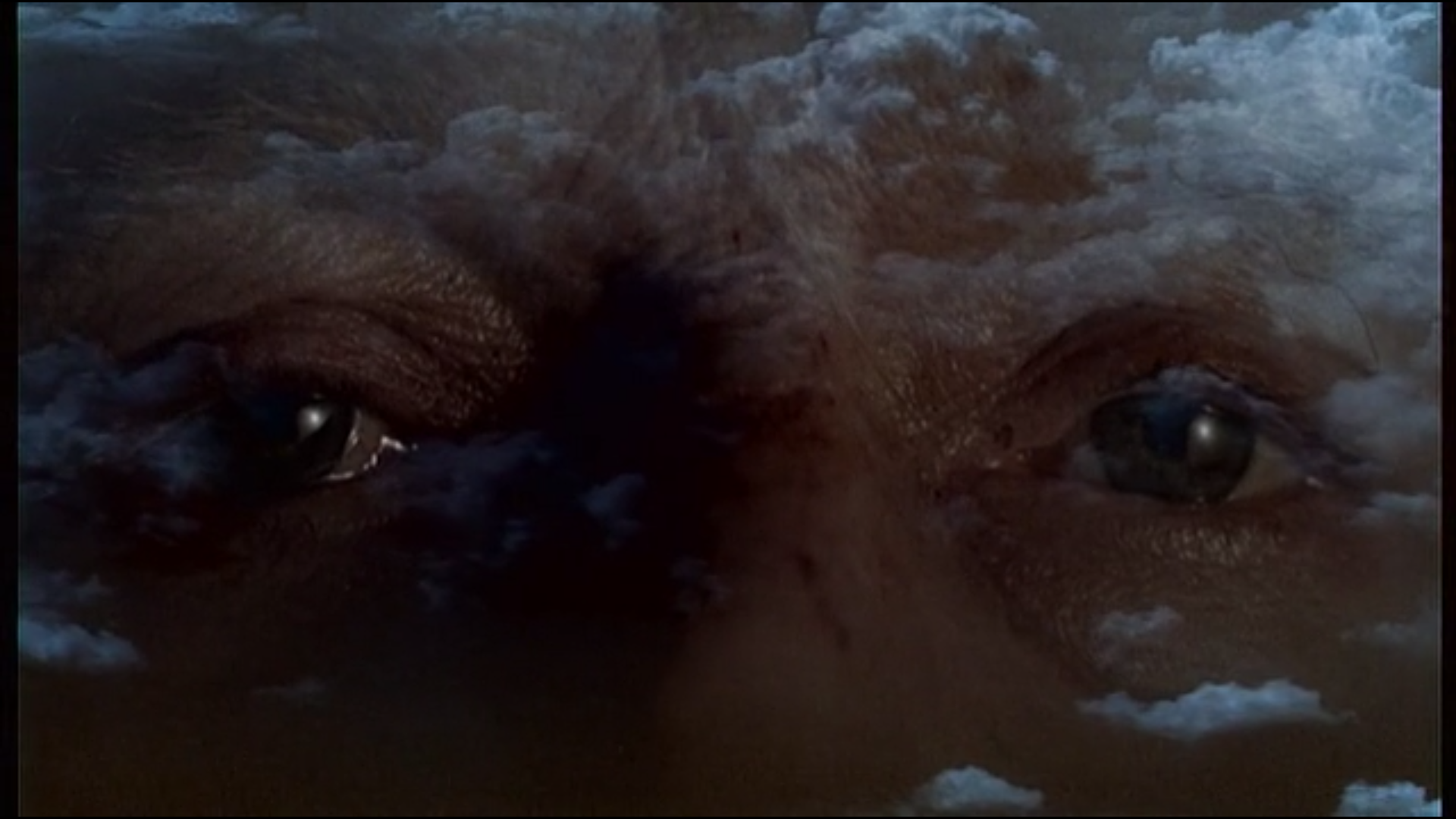
“The film unravels the strange twisting drama of a working man’s life. It moves from a decaying rural past to a vividly modern present, driven by a dynamic music soundtrack that draws from both, and a simple flowing lyrical story telling. It is the state of memory that the film evokes, not memory as re-enactment but as texture. The film gets to the essence of how we remember. Memory as fragments, as details and layers, memory that comes at you out of the dark. From behind closed eyes, with its abstractions of light and form and sudden moments of precise clarity, taking us on an inward, visually extraordinary labyrinthine journey to the film’s end. ” British Council website.

“No way back now.”

SOME QUOTES AND A POEM USED IN THE PREFACE TO THE NOVEL

“I whispered: memory hurts wherever you touch it.” George Seferis

“In remembrance is the secret of redemption.” Holocaust memorial, San Francisco.

Exile is not a word
It is a sound
The rending of skin
A fistful of clay on top
             of a coffin
Exile is not a word
It is shaving against
A photograph not a mirror
Exile is not a word
It is hands joined in
        supplication
In an empty cathedral
It is writing your own
            hagiography
It is a continuing atrocity
It is the purgatorial
Triumph of memory
      over topography
Exile is not a word
Exile is not a word


Peter Woods

TIMOTHY O’GRADY ON THE NOVEL

“I Could Read The Sky is a novel which tells its story through words and photographs. The story is that of an Irish emigrant struggling to possess his life in acts of memory. He is old. He is alone. He is lying in bed at night in the darkness remembering a life of dislocation, of loss, of descent into madness and of redemption through music and through the love of a woman. Some of the time he is remembering on prose and some of the time in pictures. Neither is meant to illustrate the other. They are distinct acts of memory in their own right. The act of remembering itself becomes a way of completing his life.”

BIO

From the artist’s website:

“Nichola Bruce works with the moving Image. Her work is primarily about expressing the way the mind composites vision through memory. She films elements of her life almost every day and has an extensive archive of over 25 years of home movie diary.

Born in Bromley, brought up in Kent and London. Nichola went to Hornsey College of Art and then Middlesex Polytechnic where she began making objects and music, and experimenting with film. Her first film, Excuses, led to short punkfiction films on super eight and 16mm – collages of live action, performance and animation – Breath of Air, Boolean Procedure, Clip, Wings of Death, which were then followed by documentaries. Nichola continues to paint and draw as part of her process. Her experimental drama feature, I Could Read The Sky (2000), explored a man alone remembering his past. It was described as “restoring faith in the artistic possibilities of Cinema”.

In 2006 she was awarded a NESTA fellowship to study perception, mentored by RL Gregory, creating a large body of work including 26 short films on the Strangeness of Seeing (with Rebecca E Marshall). Nichola’s work often involves collaborations with other artists, including The Monument (nameless library) with Rachel Whiteread, The Human Face with Laurie Anderson, and Moonbug with Steve Pyke. Her archive continues to inform her latest works, such as Elixir, an elegy made in response to the death of her father, and Pale Shadows an experimental approach to Handels Opera Alcina. Themes that reoccur in her work, as elements of memory and perception, are presence after death, and the tension between the internal world of the mind and external existence.

She exhibits her work wherever she can, as film, Installation, single and multiple screenings at galleries, cinemas, other venues, and online.”

FILMOGRAPHY

2012 Things As We Are
2012 Ingo Maurer (Hong Kong flame)
2012 Binnie Sisters in Sussex
2011 Axis of Light
2010 Moonbug
2010 Look Lock Walk
2010 Dreams Dreams Dreams
2010 Flayed Soul
2009 Rosebud
2009 Unexplained Feelings
2008 Weighing of the Heart
2002-2008 Strangeness of Seeing, 26 Short Films
2003 Corporeal memory
2002 Acts of Memory 0.5
2001 Acts of Memory 1
2001 Laugh
2001 Power to the Pixel
1999 I Could Read The Sky
1997 The Monument (nameless library)
1997 Queen ‘Made In Heaven’ My life has been saved
1997 Tight Roaring Circle Film
1996 The Loved
1996 The Photo Show x 6 (Series Producer)
1995 One man show Dramatic Art of Steven Berkoff
1994 La Difference x 4 (Series director)
1994 Hang on a Second
1993 Blood Of Eden
1991 The Human Face
1989 Club X The Reckitts
1986 No one is too Blame
1986 Wings of Death
1983 Clip
1980 Boolean Procedure
1976 Breath of Air
1975 ExcusesLINKS

Nichola Bruce’s website

CAST

Dermot Healy

Stephen Rae

Brendan Coyle

Maria Doyle Kennedy

Jake Williams


CREDITS

Director: Nichola Bruce
Producer: Janine Marmot, Hot Property Films
Co-producer: Nick O’Neill, Liquid Films
Editor: Catherine Creed
Director of Photography: Seamus McGarvey, Owen McPolin
Production Designer: Jane Bruce
Sound: Cameron Hills, Dan Birch
Music: Iarla O’Lionáird, featuring tracks by Sinead O’Connor, Martin Hayes, Liam O’Maonlai
Writer: Nichola Bruce

British Film Institute, Irish Film Board, Gemini, Real World


John Smith – The Interviews

“[My films] rework and transform reality, exploring and exposing the language and manipulative power of cinema.” John Smith.

“You just need to look at things closely and if you’re patient and look hard enough things often fall into your lap… it’s just a question of waiting around.” John Smiith.

During his thirty-odd years as a film-maker John Smith has regularly been interviewed.  The interviews provide an insight into both the craft of film-making and the effects of technological developments on film-making practise, and, whilst been shot-through with Smith’s wit and generosity of spirit. make clear the serious intent and  intellectual influences behind Smith’s work.  A comprehensive archive of the interviews, reviews and articles can be found at: www.johnsmithfilms.com.  In the interim, here’s a few as a taster.

A fascinating insight into the craft behind the films, the challenges of working in both the cinema and the gallery, and the intellectual influences from Brecht to John Grierson.

“Ben Rowley: I’d like to begin by asking you about the impact of changing technology upon your work. What was the first film camera you shot with?

John Smith: That was a clockwork Bolex, I had a very old one to begin with. The old ones have a very small viewfinder on them so you’re looking at this tiny image. Most of the films I’ve made were shot using a Bolex camera, though mainly with a later model where I could see what I was filming (laughs).

BR: So were you using the Bolex through the 80s?

JS: Nineties too, yeah. Blight, the last piece that I shot on film, was shot on a Bolex. With that camera you can wind the film back and film a second exposure, so when I was making The Black Tower, for example, I could mask half the frame and rewind the film to make cars disappear behind trees and so on.

BR: That’s all ‘in camera’ stuff?

JS: Yes, I didn’t like leaving that kind of thing to the labs, you wouldn’t know if it was going to work until it was too late.

BR: I’m interested in your transition from using 16mm film to using video.

JS: When I first started working with film there wasn’t really any choice between working with film and video if you were interested in the aesthetics of the image”

Courtesy of Ben Rowley, Sidney Cooper Gallery and John Smith

Life in Film: John Smith

In an ongoing series, frieze asks artists and filmmakers to list the movies that have influenced their practice. John reflects on the importance of Bambi, Ben Hur and James Bond.

“The earliest event I can remember occurred when I was about six months old. It was a sunny afternoon and I was lying in my pram in the garden”

Courtesy Frieze and John Smith

Stuart Comer talks to John Smith about narrative, deconstruction, structuralist film-making, the power of puns and Brechtian alienation (amongst other things):

“Smith’s dark wit diverts the viewer into unexpected and unruly networks of meaning and absurdity…Committed to defamiliarizing what we see and hear but never offering easy experiences of resolution, Smith has produced an important body of work that reorients our critical bearings as the outpouring of images becomes ever more promiscuous…[] Stuart Comer talks to the film-maker about his deft use of strategic ambiguity and disorderly humor.”

Courtesy Art Forum and John Smith.

Nick Bradshaw and John Smith in more conversation on film-making, exhibiting and the dangers of confessions (with some politics along the way):

NB – Third Attempt, like the whole exhibition, shows some of the things that have been changing in your work over time – one of which is the foregrounding of yourself. Has that become easier?

JS – Absolutely. When I made The Girl Chewing Gum I used my own voice, but couldn’t bear to listen to it – I remember playing around in the RCA dubbing studio trying to disguise it, make myself sound more grown-up. But now it’s been tuned by years of cigarettes and whisky…I still feel slightly uncomfortable with some of the more confessional aspects of the work, but take a sort of masochistic pleasure in making myself squirm. Particularly in the Hotel Diaries, which are improvised single takes, I’ll say something and think “Fucking hell, that was embarrassing”, but I’m stuck with it. But it’s quite a deliberate device to have that level of mistake in those pieces. I don’t want to be didactic because I’ve got nothing special to say; I’m sure my armchair-socialist opinions are very irritating for a lot of people. I hope the spontaneity makes them less like a lecture; I’m more interested in sharing concerns and cathartically – for myself – ranting… I really like that the Hotel Diaries pieces have given me the opportunity to go around the world and slag off my government’s involvement in Iraq and Afghanistan.

NB – The unedited aspects seems quite radical not only in the context of your earlier works, but also given how heavily processed TV has become.

JS – They’re wilfully simple. I’ve got myself into trouble at film festivals when I’ve won prizes for those films, particularly in Cork when I won the main prize for Museum Piece. I had to make a speech, and I said that it gave me particular pleasure to get a prize for this film because I’m a great believer in economy, and this film cost €7, or the price of one DV tape. And afterwards I had so many really angry young filmmakers coming up to me, saying “I borrowed £10,000 to make my film, and yours is a load of shit!”…What does sometimes upset me if people don’t tune into those pieces is when they ask, “Did you plan what you were going to say, or did you just switch on the camera and wave it around?” Actually, apart from Frozen War, the first piece, which is spontaneous, they’re all planned: I know what I’m going to be looking at when I’m talking about a particular thing, and there are lots of connections between image and sound. But maybe people just don’t get the metaphorical significance of talking about Yasser Arafat having just died while the camera’s looking at an empty bed, those sorts of things.

Courtesy Sight & Sound and John Smith