
Contemporary Materialities or smth
A solo exhibition from Constant Dullaart
1 March 2016 – 21 March 2016
Introduction
In Contemporary Materialities or smth, Constant Dullaart explores the formal properties of the Internet as a medium of expression and a mode of distribution, whilst critically engaging with the technological and socio-political constraints that structure our experience and use of the Internet. Through the works in the exhibition, as with his other works, the artist subverts the Internet standards imposed by oligopolic service providers, such as YouTube, Google, Twitter, Amazon, Facebook, et al, to make visible the infrastructure of the Internet and question the power relations embedded therein.
Dullaart often contrasts the recent tendencies for the Internet to be colonised and surveilled by governments and corporations, and the related construction of panoptic ‘gated communities’ and blurring of the distinctions between public and private, consumer and producer, with the apparent openness, democracy and anonymity of an earlier era that saw the rise of the Commons, Open Source and File Sharing. However, this is not a simplistic, nostalgic yearning for a lost utopia; it is the creation of a constructive tension between what was and what is, a tension that empowers us to imagine what can be:
“My proposal is that artists (and their audiences) must find new spaces to develop their work by engaging with the possibilities offered by the freedoms of encryption. To achieve this, they must surpass the misconception of technical elitism and the idea that only those with ‘secret knowledge’ can have access to space without surveillance. We must realize that this knowledge is obtainable for all.” Constant Dullaart, Where to for Public Space in You Are Here: Art After The Internet, ed. Omar Kholief, 2015.
Contemporary Materialities or smth is Carroll/Fletcher’s first online exhibition (all the works in the show – apart from those already in collections – are for sale). The exhibition is the first in a series that will investigate the aesthetics and artistic potential of the Internet.

TOS 2012, Constant Dullaart, 2012
Embedded HD video, 10’20”.
Edition of 3 plus 1 AP, price and further details on request.
View the website here
TOS 2012 is a 10′ 20″ video of an animated Google search page, reading out loud the Terms of Service for users of Google’s English language search engine. The artist is committed to making the work publicly available on his website here. To reflect the ever changing, fluid nature of terms of service, an updated version of the work is made each time the work is exhibited. To date, two further versions have been made – TOS (Russian) 2013 and TOS (English) 2014. Each version is an edition of three plus one AP.
“I was looking at how services like Google or Facebook want to be transparent, but how they show this information is kept secret. These terms of service agreements and how they communicate this to you, either through marketing or explaining how it works, they are saying you are agreeing with it by using it. I thought it was interesting because a lot of the Internet is viewed as public space but it’s not. The Internet is basically private spaces linked together. And Google’s private space is made to make a profit.” Constant Dullaart, Motherboard interview, 2013. The full interview is available here: http://motherboard.vice.com/blog/constant-dullaart-loves-the-internet
“How many of us are aware that as soon as we use Google we implicitly signed their Terms of Service and become subject to the laws of California. Do you want to be judged in a court in California?” Constant Dullaart, interview with Carroll/Fletcher, 2016.

The Death of the URL, Constant Dullaart, 2013
Website; server space, domain name (with subdomains) javascript and .jpg image
Unique, price and further details on request.
View the website here
The viewer’s gaze naturally settles on the static, green, uppercase text set against a grey background within the frame:
THE DEATH OF THE URL
CONSTANT DULLAART
2013
In what way is the URL dead? If it is, what killed it? Surely, the website has an address, hence, proving that the URL is not literally dead? When we look from the text to the address bar to confirm the existence of a URL, things start to become active, hyper-active even. The address bar is flashing as the URL ceaselessly cycles around a loop of frames within the underlying website – the website tab is also changing to reflect the movement. Hitting the back button doesn’t help as we are simply taken back to another place in the loop from where the restless movement restarts. Attempting to copy the URL proves almost impossible, as it never stays still long enough to be captured. Repeated clicking on the ‘x’ next to the address bar eventually pauses the manic cycling and the URL is revealed:
http://xxxxxxxxxxxxxxxxxxxxxxxxxxxxxxxxxxxxxxx.xxxxxxxxxxxxxxxxxxxxxxxxxxxxxxxxxxxxxx.xxx
So if the URL isn’t literally dead, what is the artist concerned with?
“Nobody types in the domain name anymore. In my first online experiences, I would type in a domain name from a magazine. By now, you just go to Google or Facebook and you type in the keywords. Now if you share pictures, you’re not going to put it on a website, you’ll put it on Facebook. You’re not taking control of your own data anymore. When I went to China, that’s what I saw – people not taking the initiative to protect their own private space anymore. It’s public space controlled by the state. In America it isn’t controlled by the state, but Google and Facebook. There’s this weird discrepancy between public and private space going on right now and I think Occupy Wall Street was a great example of that, a protest in a private space. The web started with a lot of ideals around it, making a world with open communication. The idealist infrastructure of the web is changing. That’s important.” Constant Dullaart, Motherboard interview, 2013. The full interview is available here: http://motherboard.vice.com/blog/constant-dullaart-loves-the-internet
In it’s manic attempt to evade the control of the user The Death of the URL mimics the colonisation of the Internet by governments and corporations; it has also taken over our history – just go to the ‘history’ tab on your browser to take a look…
Dullaart is not alone in lamenting the increasing control over the users’ experience of and access to the internet and the world-wide web, and the opacity with which these controls are implemented. In December 2012, Forbes magazine ran an article Directed Browsing And The Death Of The URL:
“One area of the Internet that I think is suffering in the current climate of social media, targeted search, and recommendation engines, is the ability for people to find a website on their own. More emphasis is being placed on having a strong presence on Facebook, having pages and stories picked up by Reddit, Stumbleupon, and Twitter, while the idea that content is still published on its own website, more and more the ability to discover a website is being taken away from the individual.
“While every web browser still has a URL bar that allows someone to enter a website address, but with shinier interfaces and toys available, the role of the direct URL is being diminished. Open up a new tab on a modern web browser and you’ll be presented with a collection of sites that you are likely to want to click through to. Generally these are comfortable choices derived from your history… [full article here]”
Courtesy Ewan Spence and Forbes.
Anamorvista, Constant Dullaart, 2012
Website; code, domain name, router
Unique, price and further details on request.
View the website here
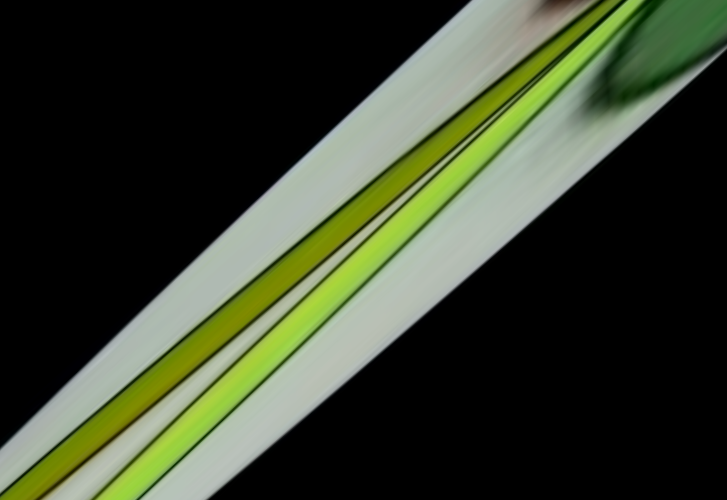
Anamorvista is an adaptation of Geometry of Circles, an animation with a soundtrack by Philip Glass created for Sesame Street. Dullaart has modified a YouTube player to make the video respond to the viewers’ mouse movements – as the viewer moves their mouse over the animation the image appears to flip and tilt within 3D space while the animation continues to play. A version of the original animation can be viewed here. The work was commissioned in 2012 by e-PERMANENT, the first in a series of online commissions exhibited on e-PERMANENT’s website.
The address bar functions in a similar manner to The Death of the URL (see also the browser History). The artist has credited the commissioning body in both the tab and the website column in the History cache).
Anamorphosis is a distorted projection or perspective requiring the viewer to use special devices or occupy a specific vantage point (or both) to reconstitute the image. The word is derived from the Greek prefix ana‑, meaning back or again, and the word morphe, meaning shape or form. Source: Wikipedia, full article here: https://en.wikipedia.org/wiki/Anamorphosis

thedisagreeinginternet.com, Constant Dullaart, 2008
Website; code, domain name and router
Unique, price and further details on request.
View the website here
In contrast to The Death of the URL, in The Disagreeing Internet the address bar is static whilst the frame is moving, and the tab offers an ironic subtitle. The Disagreeing Internet is the first in a series of six works that, without disrupting the functionality, playfully question the familiar, apparently neutral, google website:
The Disagreeing Internet, 2008, http://thedisagreeinginternet.com/
The Doubting Internet, 2010, http://thedoubtinginternet.com/
The Revolving Internet, 2010, http://therevolvinginternet.com/
The Sleeping Internet, 2011, http://thesleepinginternet.com/
Internet spread, 2012, http://internetspread.com
Untitled Internet, 2012, http://untitledinternet.com
“All these works display a simple, single behaviour. They deal with the home page of Google, which remains fully functional despite its unorthodox appearance. Whether you first read the domain name, or first focused on the content of the page, when you put them together you get the joke, and you probably smile. And then? Then you leave, maybe a bit disappointed (especially if you were told that this is a work of art), but also richer in a way. You now know, consciously or unconsciously, that Google is not God. That Google is not the absolute untouchable, clear thing it pretends to be. It censors, and can be censored. It can be displayed upside down. It can disagree, doubt and sleep. The Revolving Internet is like Anderson’s famous tale , The Emperor’s New Clothes: when you read it, nothing really changes, except your perception of those in power… [the full article can be found here].”
Courtesy Domenico Quaranta
Not long after, Dullaart created The Revolving Internet Google stopped supporting iframes (the software that enabled the disruptive detournement of the website). The artist found a work-around that ensured the works would continue to function.

Defaultism, Constant Dullaart, 2010
Website; code, domain name and archived website on router
Unique, price and further details on request.
View the website here
Similar concerns can be found in Dullaart’s work Defaultism – http://www.defaultism.com, which shifts between a number of basic frameworks commonly used as templates for websites. A default, in computer science, refers to a setting or value automatically assigned to a software application, computer program or device. Such settings are also called presets, especially for electronic devices. The Oxford English Dictionary dates this usage to the mid-1960s, as a variant of the older meaning of “failure in performance”. Default values are generally intended to make a device (or control) usable ‘out of the box’, i.e. with minimal user interaction with the device and it’s potential and constraints.

Jennifer_in_Paradise, Constant Dullaart, 2013
Restored digital image re-distributed online, holding a steganographically encrypted payload within the code of the JPG file, which can only be revealed by a password
Series of 3, price and further details on request.
A buyer of the work receives the password and software to enable the decryption of the code embedded in the image, and documentation of the project (including a signed certificate of authenticity).
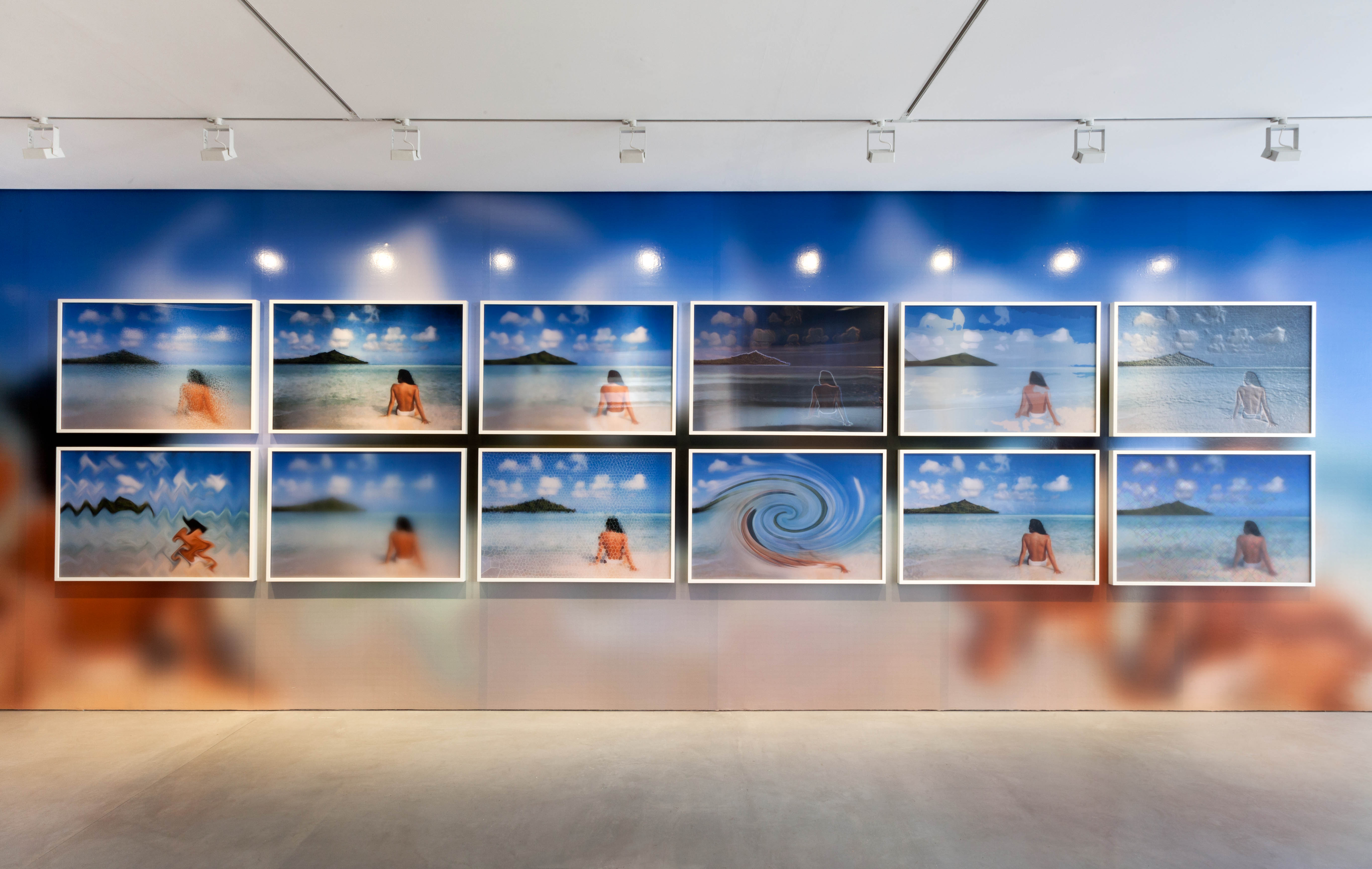
Jennifer in Paradise is one of the first pictures to be manipulated in Photoshop. Originally, a holiday snap taken by John Knoll, co-creator – along with his brother Thomas – of the now ubiquitous software, it depicts Knoll’s girlfriend sitting on an idyllic tropical beach languidly gazing at the clear blue sea. The image was digitized by Kodak in 1987 and supplied with early versions of the programme. Though initially widely available, it became increasingly difficult to track down. In 2013, in recognition of its cultural significance and intrigued by the story of Jennifer and John, Dullaart determined to restore and make readily available the image, and uncover its history.
“My recent restoration of the 1988 image that became the first publicly manipulated image in Photoshop, Jennifer in Paradise (originally taken by John Knoll, co-creator of the software), was not intended purely for the redistribution of the of the image itself. Originally, the image was used to show potential customers and investors of Photoshop the possibilities of the software. The image I restored, also named Jennifer in Paradise, was redistributed online through articles, tweets, blogposts, and other social media networks by various sources. Importantly, this restored image included a secret message woven into the code of the image file through a steganographic encryption. Steganography uses a method to attach bits of a file to the background noise of, for example, a jpeg file; it is often used by security experts to ensure private communication over the internet. To read out this non-visible information, a password is often required to decrypt the message from the image. The use of steganography adds a layer of meaning to the digital image as a medium. The hidden message, revealed only with the right encoding software and password, signifies a hierarchical layer of knowledge necessary to fully understand the image in its entirety – only a chosen audience can access all the information the image contains. This points to the claim of a private space with something that is publicly viewable, in this case the restored version of the Photoshopped image.” Consant Dullaart in You Are Here, Art After the Internet, ed. Omar Kholief, 2014.
Alongside the image file Dullaart has produced a series of lenticular prints, in which the image is manipulated using a photoshop filter, and a website – www.jennifer.ps. The website is a GIF constructed from Jennifer in Paradise images manipulated using the same Photoshop filters as the lenticular prints. The website’s source code contains a ‘post scriptum’ update to Dullaart’s September 2013 letter to Jennifer.
Writing on the series of lenticular prints, Erika Balsom observed:
“With its array of pixels functioning as so many modular elements open to discrete manipulation, the CGI image stands as an emblem of a completely administered world, allegorising the forms of social, biopolitical and informational control under which we now live. By taking the 1988 photograph that served as the original demonstration image of Photoshop and subjecting it to the various filters proper to the software, Constant Dullaart’s Jennifer In Paradise series (2013- ) testifies to the plastic malleability of digital imaging. But its relentless versioning also hints at a crucial point: this creativity is the flipside of unprecedented fine-grained control. The grid of the calculable image is an emanation of the new regime of algorithmic governance, a figuration of a world in which everything can be surveilled, tracked and monitored – right down to the very last individual, just as the digital image can be specified down to the last pixel.” Erika Balsom, On the Grid, in Electronic Superhighway catalogue, 2016.
Further details of the artist’s archaeological quest, including his correspondence with Jennifer and John Knoll, can be found here.
inhuman.me, Constant Dullaart, 2008
Website; code, domain name and router
Unique, courtesy of the Dirk Paesmans collection
View the website here
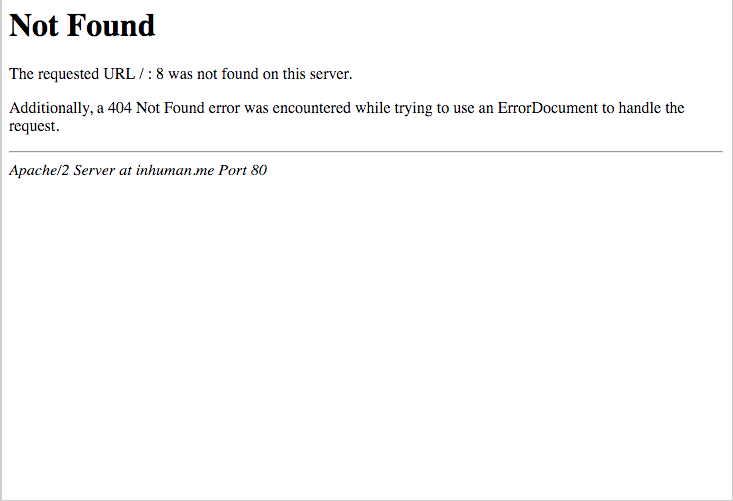
On typing www.inhuman.me in the address bar then ‘hitting return’ the viewer is presented with, what looks at first glance to be, a generic error message: ‘Not Found. The requested URL / : ) was not found on this server’. However, the requested URL was www.inhuman.me not / : ) and as we look closer the ‘requested URL’ keeps changing – : ) : 8 : P : D : o ; ) : ‘ c : x : ) : 8 : P… – and the tab flickers with the text ‘no emotions’.
Inhuman.me uses the technique of an ‘induced server error’ to frame the work. Dullaart used a similar technique to publish his 2013 manifesto ‘Balconism’ on the websites of Frieze, Artforum and Flash Art, while simultaneously publishing it in ArtPapers. An audio rendition of the manifesto can be listened to below, and a full publication including responses from James Bridle, Shumon Basar, Victoria Camblin, Aram Bartholl, Jonas Lund, and an interview between Omar Kholeif and Susanne Treister is available in the Carroll/Fletcher shop.

baselitz.org, Constant Dullaart, 2010
Website: code, domain name, Wikipedia article, documentation dossier, and router with archived website.
Unique, price and further details on request.
View the website here
An Internet ready-made; a détournement of the Georg Baselitz Wikipedia page and a parody of Baselitz’s signature style: “A parody (also called spoof, send-up, take-off or lampoon), in use, is a work created to imitate, make fun of, or comment on an original work, its subject, author, style, or some other target, by means of satiric or ironic.” (source wikipedia).
Biography
Constant Dullaart (b. 1979, Leiderdorp, Netherlands) studied at the Gerrit Rietveld Academie and Rijksakademie in Amsterdam. Solo exhibitions include Jennifer in Paradise, Futura, Prague; The Censored Internet, Aksioma, Ljubljana (both 2015); Stringendo, Vanishing Mediators at Carroll / Fletcher, London; Brave New Panderers, XPO gallery, Paris (both 2014); Jennifer in Paradise, Future Gallery, Berlin; Jennifer in Paradise, Import Projects, Berlin (2013) and Onomatopoeia, Utah Museum of Contemporary Art, Salt Lake City (2012). Group exhibitions include Electronic Superhighway, Whitechapel Gallery, London (2016); Follow, FACT, Liverpool, UK; Then They Form Us, MCA, Santa Barbara; When I Give, I Give Myself, Van Gogh Museum, Amsterdam (both 2015); Evil Clowns, HMKV, Dortmund, Germany (2014) and Online/Offline/Encoding Everyday Life, transmediale Festival, Berlin (2014). He lives and works between Berlin and Amsterdam.
Full cv available here
Artist’s website: www.constantdullaart.com
Artist’s pages at Carroll/Fletcher: http://www.carrollfletcher.com/artists/76-constant-dullaart/overview/
Afterword 1
“This song is Copyrighted in the U.S., under Seal of Copyright #154085, for a period of 28 years, and anybody caught singin’ it without our permission, will be mighty good friends of ourn, cause we don’t give a dern. Publish it. Write it. Sing it. Swing to it. Yodel it. We wrote it, that’s all we wanted to do.” Woody Guthrie.
“This is our world now… the world of the electron and the switch, the beauty of the baud. We make use of a service already existing without paying for what could be dirt-cheap if it wasn’t run by profiteering gluttons.” The Mentor, Hacker Manifesto, 1986
“There’s a battle going on… a battle to define everything that happens on the internet in terms of traditional things… Is sharing a video on BitTorrent like shoplifting from a movie store? Or is it like loaning a videotape to a friend? Is reloading a webpage over and over again like a peaceful virtual sit-in or a violent smashing of shop windows? Is the freedom to connect like the freedom of speech or like the freedom to murder?” Aaron Schwartz, Freedom to Connect speech, 1986.
“Governments of the Industrial World, you weary giants of flesh and steel. I come from Cyberspace, the new home of the Mind. On behalf of the future, I ask you of the past to leave us alone. You are not welcome among us. You have no sovereignty where we gather.” John Perry Barlow, A Declaration of the Independence of Cyberspace, 1996.
“Identities are managed by commercially driven algorithms; the URL has died; SLL is broken; most communications are recorded and analyzed for reasons beyond our access. Can art still play an active role in finding new visions, of locating hope and beauty to deal with the Internet in times of Prism? (As I write, the uk Prime Minister is suspected of having ordered the destruction of a journalist’s hard drives.) Or should we leave these subjects for activists to deal with, and just enjoy the images on our Google Glasses™, perhaps even printed on aluminium?” Constant Dullaart, Frieze, November-December, 2013
“My proposal is that artists (and their audiences) must find new spaces to develop their work by engaging with the possibilities offered by the freedoms of encryption. To achieve this, they must surpass the misconception of technical elitism and the idea that only those with ‘secret knowledge’ can have access to space without surveillance. We must realize that this knowledge is obtainable for all.” Constant Dullaart, Where to for Public Space in You Are Here: Art After The Internet, ed. Omar Kholief, 2015.



the predicament of always (as it is), 2014